
Research-use-only context. This article is a laboratory-handling reference describing two supplied material formats, their stability behavior, and their preparation workflow at the bench. American Peptides research peptides are sold strictly for in vitro laboratory research and are not for human or veterinary applications.
Research peptides reach the laboratory in two common physical formats: a pre-mixed buffered spray solution and a lyophilized powder in a sealed vial that must be reconstituted before an assay. The difference is a materials question, not a usage one — the two formats differ in stability window, storage requirement, preparation effort at the bench, contamination exposure, and how readily a technician can verify content. This is a side-by-side comparison of the two as supplied materials.
How the two formats differ
| Attribute | Buffered spray solution | Reconstituted vial (lyophilized powder) |
|---|---|---|
| Supplied state | Aqueous solution, pre-mixed at a stated concentration in a metered pump vessel | Dry lyophilized cake under vacuum or inert headspace |
| Preparation at the bench | None — the solution is ready to aliquot; the pump dispenses a fixed volume per actuation | Requires reconstitution with a compatible diluent, gentle swirling, and complete dissolution before aliquoting |
| Stability window (research literature) | Shorter — peptides in aqueous media are subject to hydrolysis, oxidation, and aggregation over time | Longer — the dry state markedly slows degradation chemistry until reconstitution |
| Storage sensitivity | Refrigerated, protected from light and freeze-thaw cycling | Cold and dry; the cake is strongly moisture- and light-sensitive once the seal is broken |
| Contamination exposure | Low during handling — a closed vessel, though repeated actuation exposes the headspace | Higher — the septum is pierced and diluent introduced, so aseptic technique governs the result |
| Content verification | Concentration is fixed by the supplier; confirm against the batch COA | Concentration is set at the bench by the diluent volume, so gravimetric records and the COA both matter |
The case for the buffered spray solution
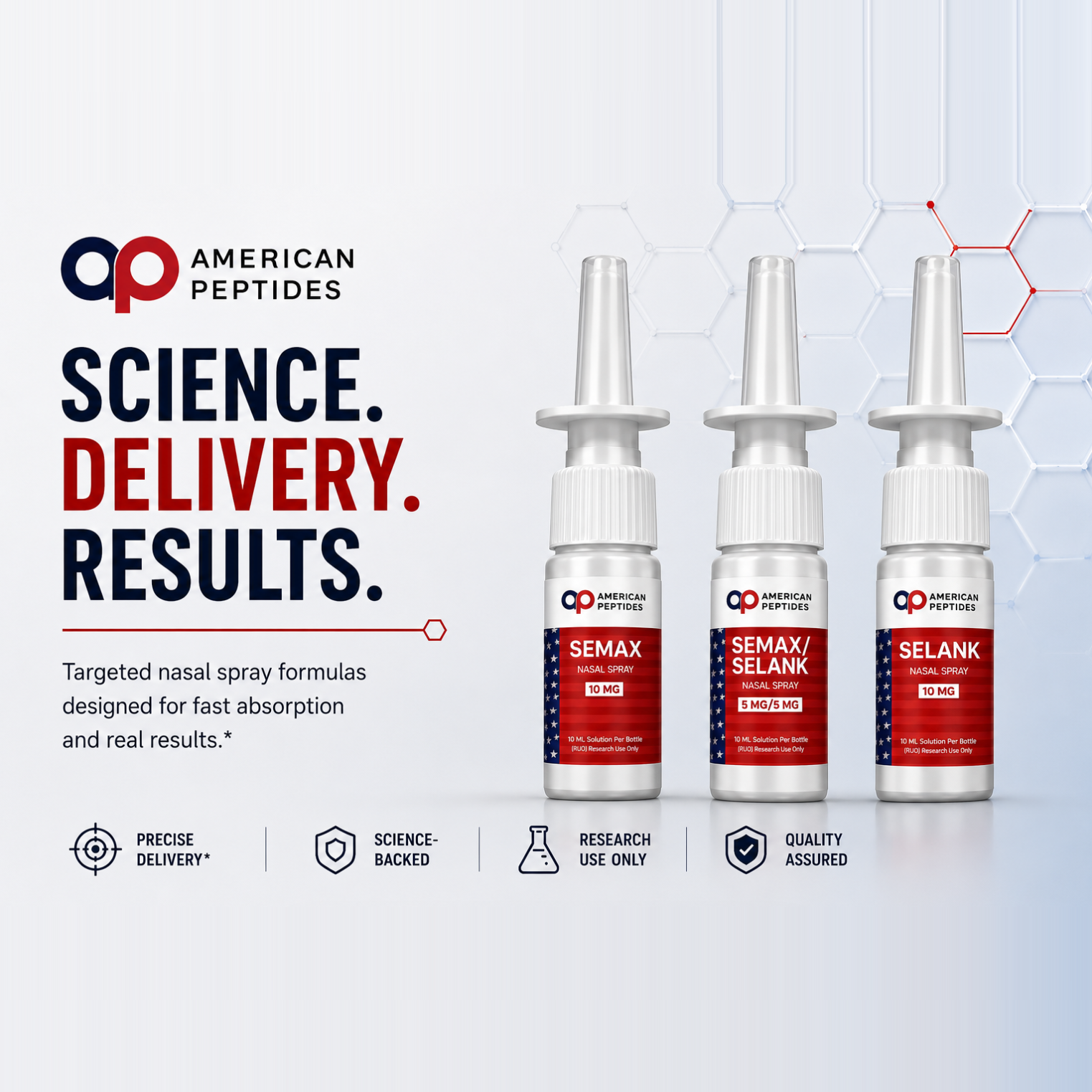
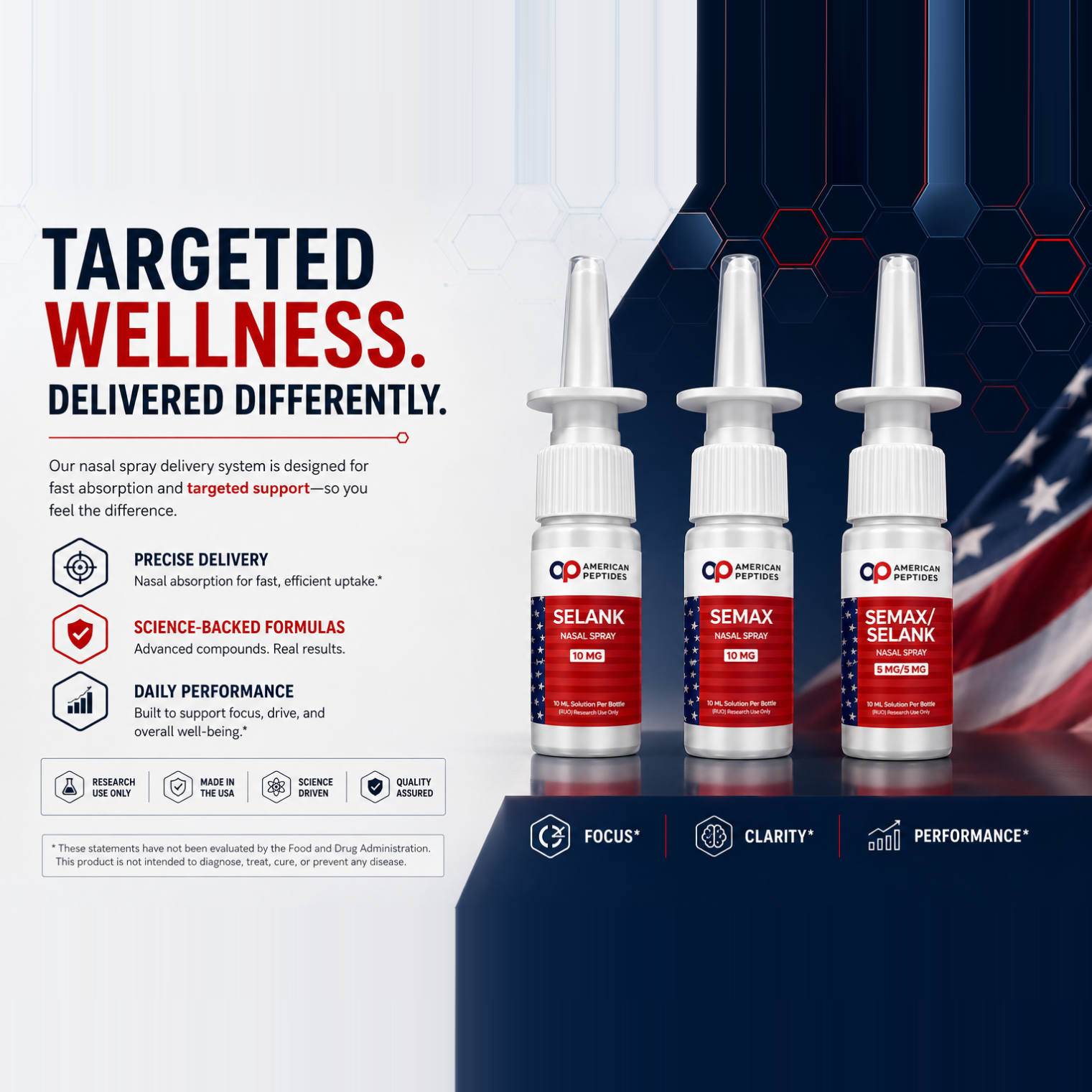
The pre-mixed solution removes the most error-prone step in the vial workflow: reconstitution. Nothing is weighed, no diluent volume has to be recorded, and no septum is pierced, so batch-to-batch variability introduced by the laboratory itself is close to zero. The buffer system is characterized by the supplier, which means pH and ionic strength are known quantities rather than variables a technician has to control. As covered in Buffered Spray Solutions in Laboratory Research, small peptides such as Selank and Semax are well suited to aqueous buffered presentation because of their solubility profile and comparatively simple sequence chemistry. American Peptides supplies all three research spray formats: Selank, Semax, and the Selank + Semax combination.
The trade-off is time. A solution is already in the phase where degradation chemistry proceeds, so its usable window is measured from the fill date rather than from the day a laboratory opens it. Freeze-thaw cycling and ambient light exposure both shorten that window in the research literature.
The case for the reconstituted vial
The lyophilized vial remains the reference presentation for stability. Removing water arrests most hydrolytic and oxidative pathways, which is why the dry cake tolerates far longer storage than any aqueous preparation of the same material. It is also the more flexible format at the bench: the working concentration is chosen at reconstitution rather than fixed by the supplier, so one lot can serve several experimental designs.
The cost is workflow. The vial must be reconstituted correctly from a lyophilized powder, kept cold, and protected from moisture ingress between uses. Incomplete dissolution, an incompatible diluent, or vigorous shaking that shears the peptide all show up later as unexplained variance. For a laboratory already running that process under a validated SOP, it is the most adaptable option available.
Matching a format to a workflow
Neither format is universally superior. The lyophilized vial maximizes shelf stability and concentration flexibility; the buffered solution minimizes preparation steps and the variability that comes with them. The deciding factors are how long the material must sit before an assay runs, whether the protocol needs concentrations the supplier does not offer, and how much aseptic handling capacity the laboratory has. The research-format pillar article maps every supplied presentation side by side.
Browse the ready-to-aliquot lineup: Spray Solutions & Thin-Film Research Formats →
Frequently Asked Questions
What is the difference between a buffered spray solution and a reconstituted vial?
A buffered spray solution is supplied pre-mixed in aqueous media at a stated concentration and is ready to aliquot. A reconstituted vial is supplied as a dry lyophilized cake that a laboratory redissolves in a compatible diluent before use in an assay. The dry format stores longer; the solution format needs no preparation.
Do buffered spray solutions require reconstitution?
No. Spray-solution formats arrive already in aqueous media, so there is no lyophilized cake to redissolve, no diluent to select, and no reconstitution record to keep. That is the format's principal handling advantage relative to the vial workflow.
Which format is more stable in storage?
The lyophilized vial. In the research literature, removing water suppresses hydrolysis and slows oxidation and aggregation, so a dry cake held cold and dry retains a substantially longer stability window than an aqueous preparation of the same material. Solutions are dated from fill and are sensitive to light and freeze-thaw cycling.
Are research spray solutions supplied pre-mixed?
Yes. American Peptides research spray solutions are supplied as pre-mixed buffered solutions in metered pump vessels, with concentration stated on the batch record, and they remain research-use-only materials.
How should a laboratory verify content for either format?
Both formats are verified against the batch certificate of analysis, which reports identity by mass spectrometry and purity by HPLC. For reconstituted vials, that verification is paired with the laboratory's own gravimetric and diluent-volume records, since the working concentration is established at the bench rather than by the supplier.
Related reading: Buffered Spray Solutions in Laboratory Research · Reconstitution Chemistry · Research Peptide Formats Explained. Verify identity and purity for any format on the COA library.
Reviewed by the American Peptides Education Team. Educational content only — not medical advice.
This article is for laboratory research reference only. American Peptides research peptides are sold strictly for in vitro research and are not for human or veterinary applications.
Related research
- Peptide Research Formats Explained: Lyophilized Vials, Solutions, Sprays, and Films
- Spray-Format Peptides: Formulation Chemistry and Stability
- Dissolving-Film Peptide Formats: The Science of Thin-Film Matrices
- What Is Selank? A Research Overview of the Peptide and Its Studied Pathways
- What Is Semax? A Research Overview of the Peptide and Its Studied Pathways
Compliance Notice: American Peptides research peptides are sold strictly for laboratory and academic research purposes only and are not intended for human or veterinary applications. All content on this page is educational, describes material handling and stability only, and does not constitute medical advice or product claims.