What Is Mass Spectrometry in Peptide QA? Complete Guide
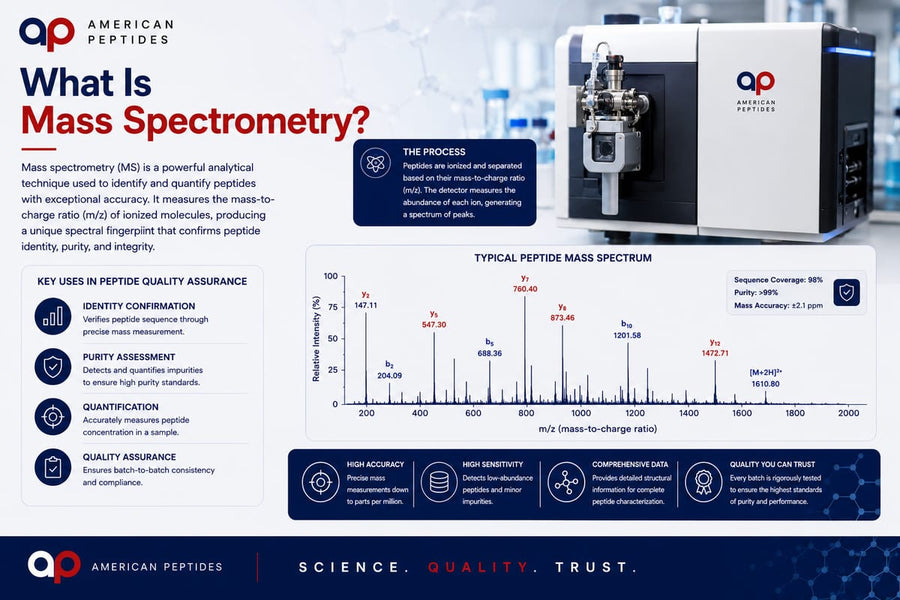
Mass spectrometry confirms a peptide's identity by measuring its molecular mass. A complete guide to how it works, what it proves, and why it pairs with HPLC on a COA.
Lab-tested guides on peptide quality, COA interpretation, lyophilization, storage, and the science behind what we ship. Compliant, accurate, written by people who handle these compounds every day.

Mass spectrometry confirms a peptide's identity by measuring its molecular mass. A complete guide to how it works, what it proves, and why it pairs with HPLC on a COA.

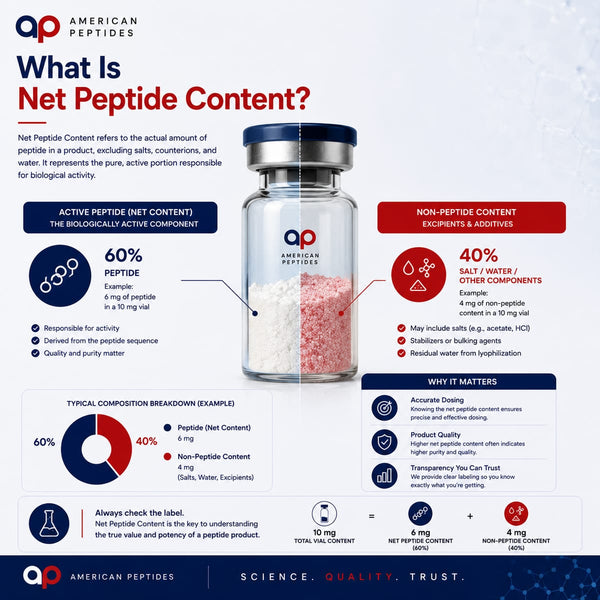
Net peptide content is how much of a vial's dry mass is actually peptide versus salts and water. A complete guide to why it dif...

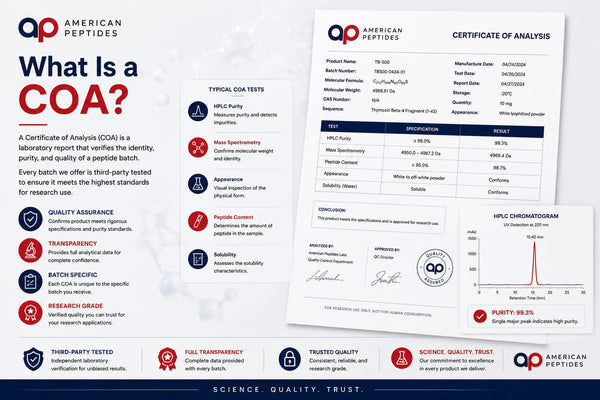
A Certificate of Analysis (COA) reports a specific lot's identity and purity test results. A complete guide to what a credible ...

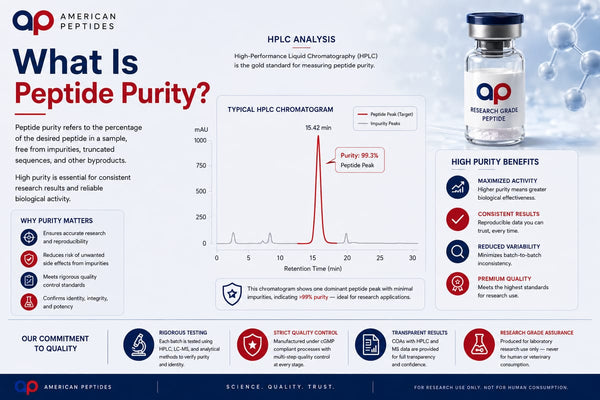
Peptide purity is the HPLC-measured percentage of a sample that is the target molecule. A complete guide to purity, net peptide...

Domestic manufacturing isn't just patriotism. For research peptides, it has measurable implications for traceability, quality c...

Glass, stoppers, crimps, inert atmosphere, tamper-evident seals — the packaging is part of the product. Here's why it matters.

What standards define a research-grade peptide? USP, EP, ISO, GMP — here's how the alphabet soup actually maps to what's in the...

What does 99% purity actually measure? What does it miss? Here's the unvarnished answer for serious researchers.

In-house testing means the supplier grades their own homework. Independent third-party labs are the only verification that surv...

A Certificate of Analysis (COA) tells you what's actually in the vial. Here's how to read every section — and the four things m...
Every batch is tested for purity, identity, sterility, endotoxins, and heavy metals. Every COA is published before you buy.
Browse the Catalog