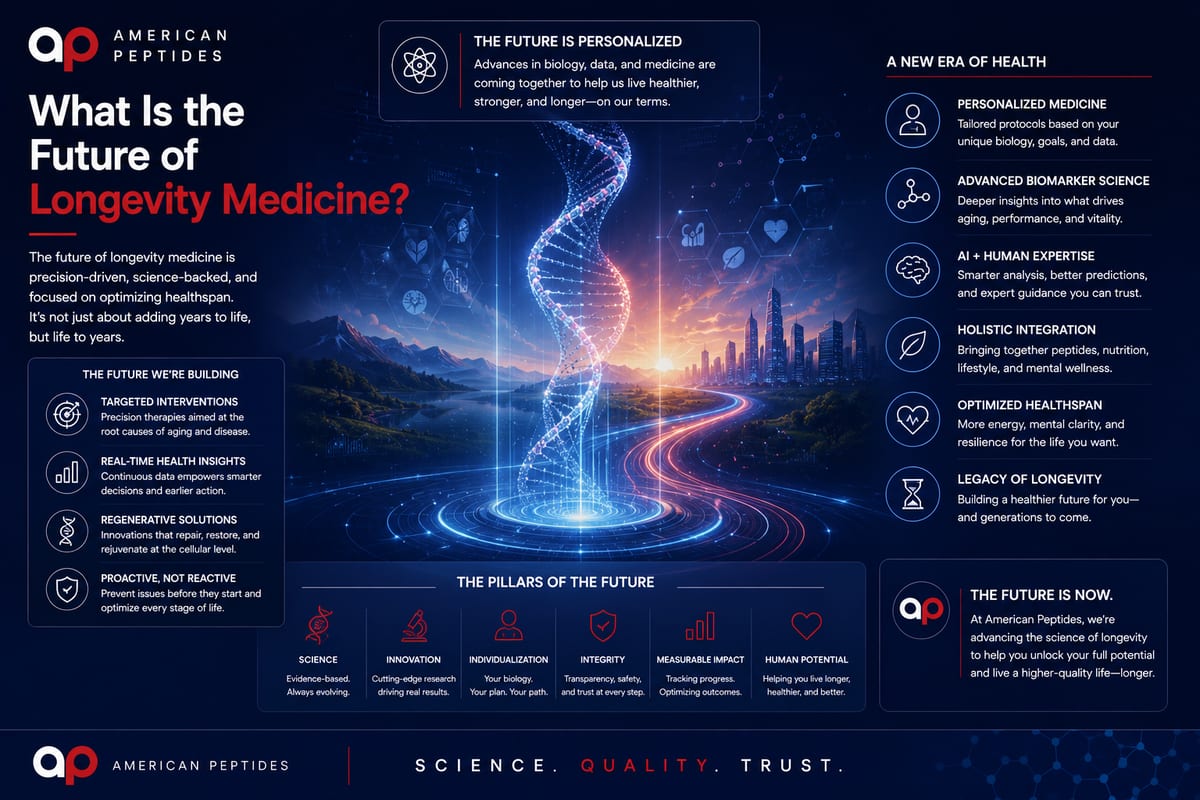
Healthspan research is an emerging, research-oriented framing of biology that emphasizes functional years, biological-aging measurement, and prevention rather than reacting to disease alone. It is a direction and a set of research questions, not a settled clinical practice. This is an educational overview — not medical advice and not a product claim.
What the field is reaching toward
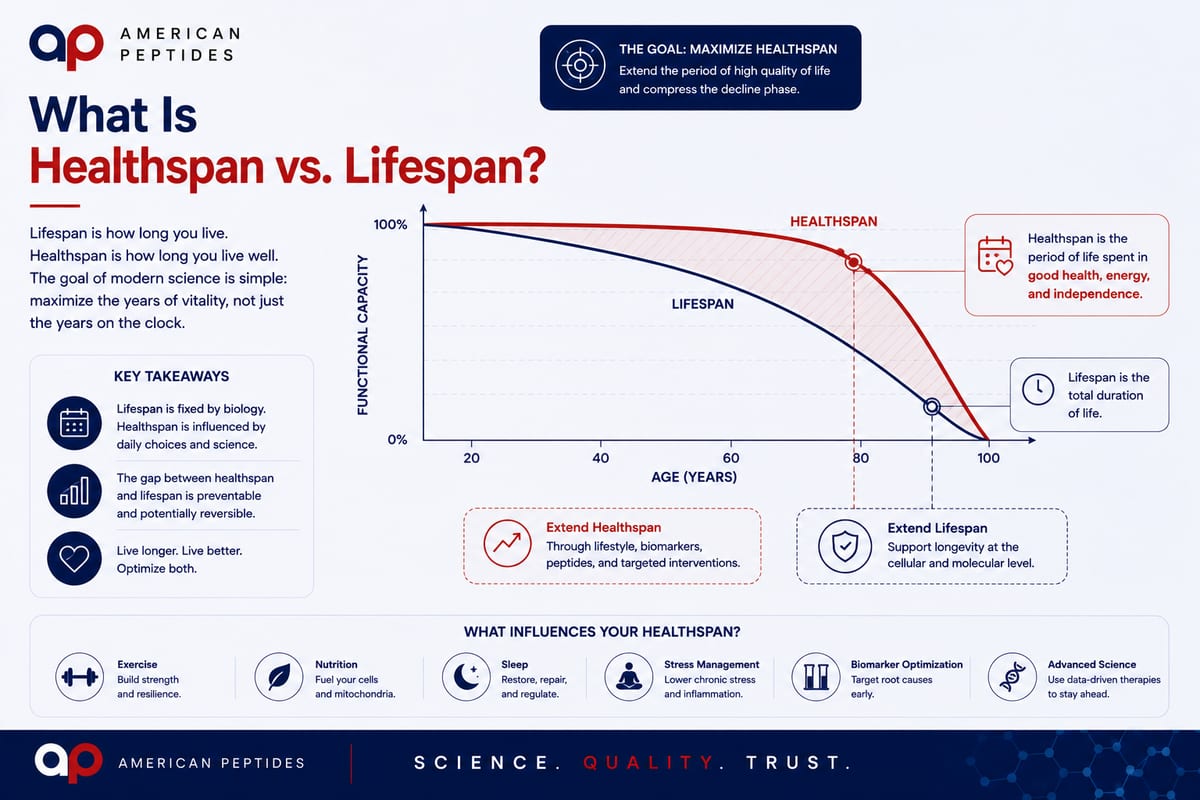
The unifying idea is shifting focus from lifespan alone to healthspan — functional years — and toward measuring biological aging rather than only treating disease after it appears. It is the convergence of preventive health science with aging biology.
Why measurement is central
A field organized around aging biology needs markers and trends, which is why it inherits the entire measurement discipline of ongoing monitoring and biomarkers. Without rigorous measurement, the field becomes branding rather than science.
| Pillar | What it emphasizes |
|---|---|
| Healthspan focus | Functional years, not just duration |
| Measurement | Biological-aging markers and trends |
| Prevention | Acting on trajectories early |
Where peptide research fits
Because aging biology is largely a signaling problem, precise molecular tools are studied as research instruments in this space — the rationale explained in why peptides are studied in aging-related research. That is a statement about research tools, not about human outcomes.
The translation gap is the headline caveat
This is decisive. The field is defined as much by its open questions as its aspirations. A great deal of what is discussed is mechanistic or model-based, and the distance to validated human outcomes is large. Credible healthspan research is explicit about that gap; hype collapses it. Nothing here claims any intervention has any effect on humans.
Where it connects
It is the umbrella over recovery measurement, preventive science, and aging-related research concepts — conceptual relationships, not claims about any product or person.
The boundary
This article describes a direction in research and care framing. It is not medical advice and asserts no outcome claim for any compound, including any product offered here.
Why the overview is worth knowing
As education, understanding healthspan research as a measurement-and-functional-years framing with an explicit translation gap is the best inoculation against the overclaiming that surrounds the term.
Why the field is defined by its open questions
What distinguishes a maturing research field from a marketing category is candor about uncertainty. Healthspan research’s most credible voices spend as much time on what is not known — how model findings translate, which markers actually track meaningful aging, what interventions do in humans over long horizons — as on its aspirations. The field inherits the full measurement discipline of ongoing monitoring and the healthspan-versus-lifespan framing, but those are tools for asking better questions, not answers. Treating the open questions as the substance of the field, rather than an inconvenience, is the single best predictor of whether a given source is doing science or selling.
Where precise tools fit — and where claims stop
Because aging biology is largely a signaling problem, sequence-defined molecular tools are studied as research instruments here, as explained in why peptides are studied in aging-related research. That is strictly a statement about research utility. The translation gap between a model-system result and a validated human outcome is large and well documented, and nothing in this field’s framing licenses outcome claims for any compound, including any product offered here. The educational value of the overview is precisely this discipline: it lets a reader separate a genuine research direction from overclaiming.
How to read the field without being sold
The practical test is simple: a credible healthspan-research source foregrounds its measurements, its models, and its uncertainties; a marketing one foregrounds benefits. Apply the same questions used across this library — what was measured, in what system, and how large is the gap to a validated human outcome — and most overclaiming collapses on contact. The field’s genuine contribution is the healthspan reframing and the measurement discipline it inherits, used to ask better questions. It is not, and this article does not present it as, a basis for any outcome claim for any compound, including any product offered here.
Why this matters for reading the field
This space is one of the most overclaimed in current health marketing, which is exactly why the candor test is so useful: foregrounded uncertainty signals science, foregrounded benefits signal sales. Equipped with the healthspan framing and the measurement discipline the field inherits, a reader can engage the genuine research direction while discarding the hype — and nothing here is medical advice or an outcome claim for any compound, including any product offered here.
Frequently Asked Questions
What is healthspan research?
An emerging, research-oriented framing emphasizing functional years, biological-aging measurement, and prevention rather than only reacting to disease.
Is it a settled clinical practice?
No. It is a direction and a set of research questions, defined as much by open questions as by aspirations.
Why is measurement central to it?
Because a field organized around aging biology needs rigorous markers and trends; without them the framing is branding, not science.
How does peptide research fit?
Aging biology is largely a signaling problem, so precise molecular tools are studied as research instruments — a statement about tools, not human outcomes.
Does this research extend lifespan?
This article makes no such claim. Much of the field is mechanistic or model-based, with a large gap to validated human outcomes.
How does it relate to preventive health?
It is the convergence of preventive health science with aging biology — a conceptual relationship, not a product claim.
Is this medical advice?
No. It is an educational overview of an emerging field, not a diagnosis or treatment claim.
Reviewed by the American Peptides Education Team. Educational content only — not medical advice.
For research use only. Not a drug, supplement, food, or medical product. Nothing here is medical advice, a treatment claim, or an outcome claim of any kind.