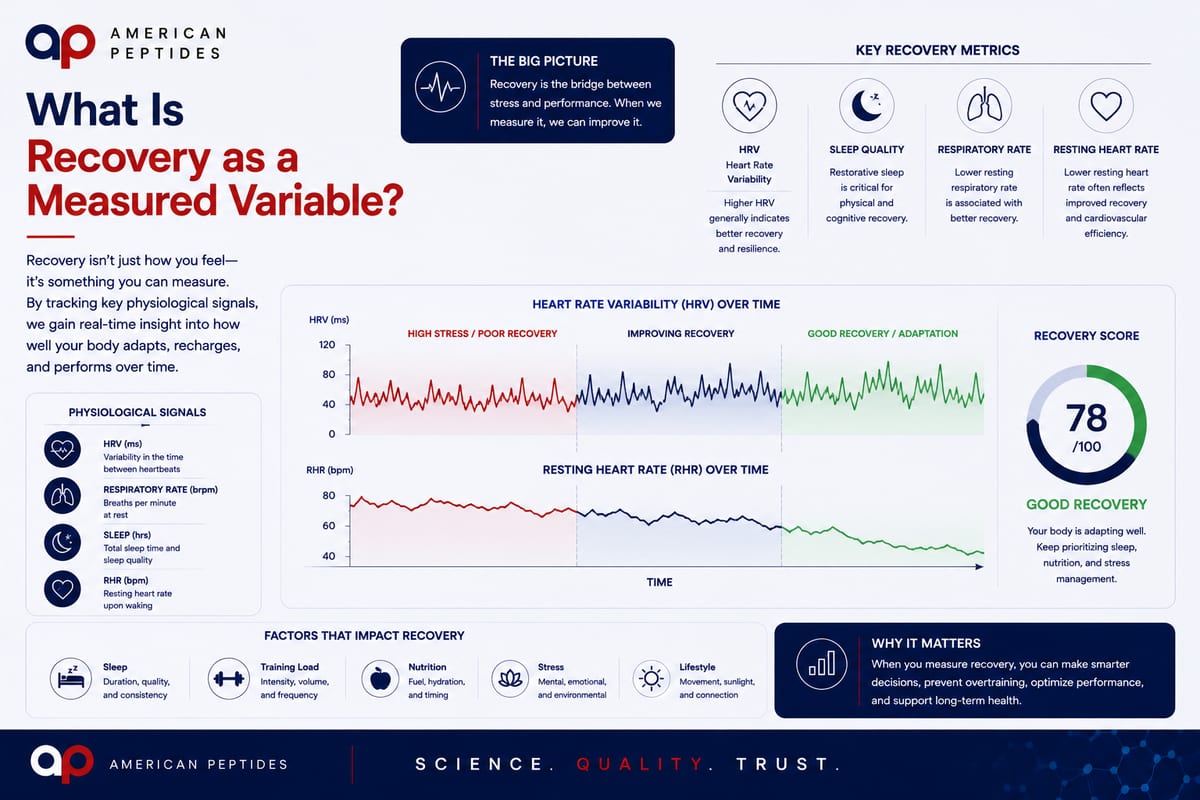

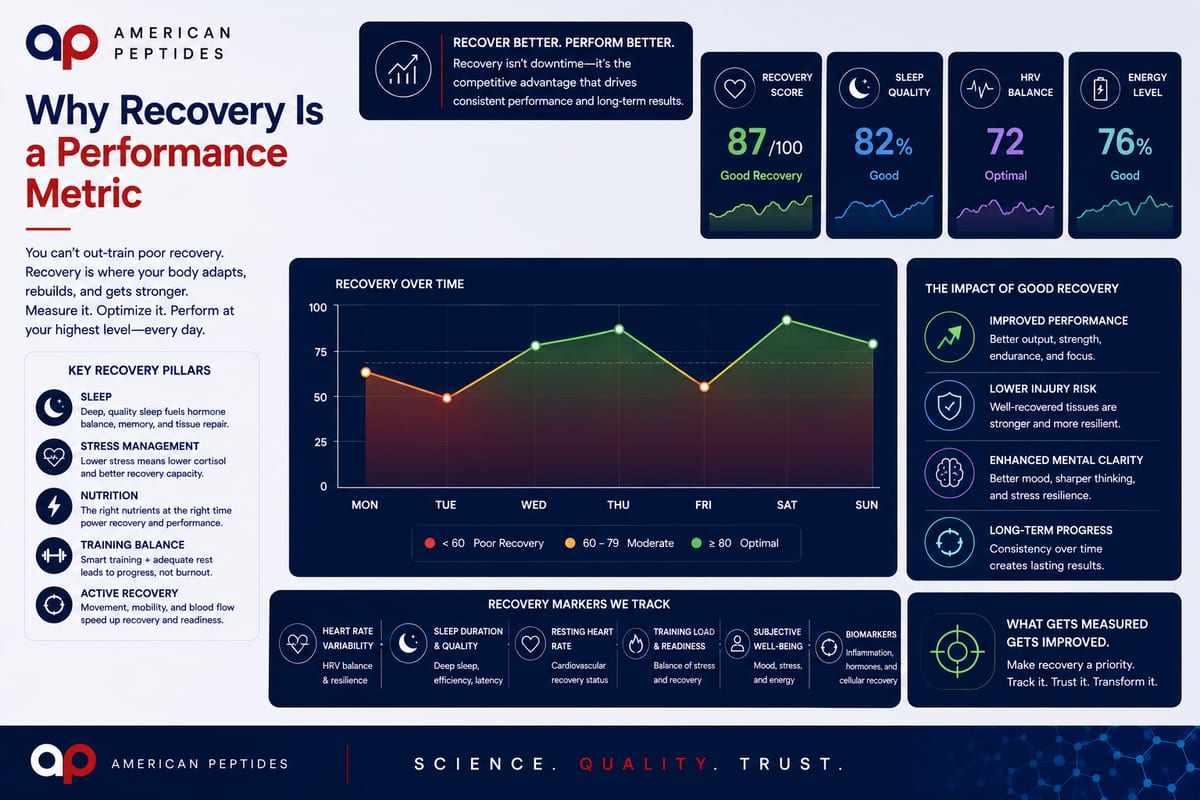
Recovery is becoming a performance metric because it can increasingly be measured as a defined variable, and what can be measured consistently can be tracked, compared, and treated as a metric rather than a vague feeling. This is an educational overview of that conceptual shift — not training, medical, or performance advice, and not a product claim.
Measurement creates metrics
A metric is just a variable that is defined and tracked. As recovery became a measured variable, it naturally moved into the category of things people monitor — the same path any readout follows once it has a definition, method, and baseline.
Why performance contexts care
In any system where stress is applied deliberately, the return-toward-baseline trajectory is informative: it indicates how the system is responding over time. Tracking that trajectory turns recovery from an afterthought into a signal worth watching — conceptually, not as a prescription.
| Stage | Status of recovery |
|---|---|
| Unmeasured | A vague feeling, easily ignored |
| Measured | A defined variable |
| Tracked | A metric that informs decisions |
Why trends, not snapshots
As a metric, recovery is only meaningful as a trend against baseline — the same principle as ongoing lab monitoring and inflammation biomarkers. A single recovery reading without context is as uninterpretable as a single lab value.
The research framing
In research, recovery metrics are defined endpoints in controlled studies; observed changes describe the studied system, not human performance outcomes. This matches the interpretation discipline of sleep and cellular-repair research.
Where it connects
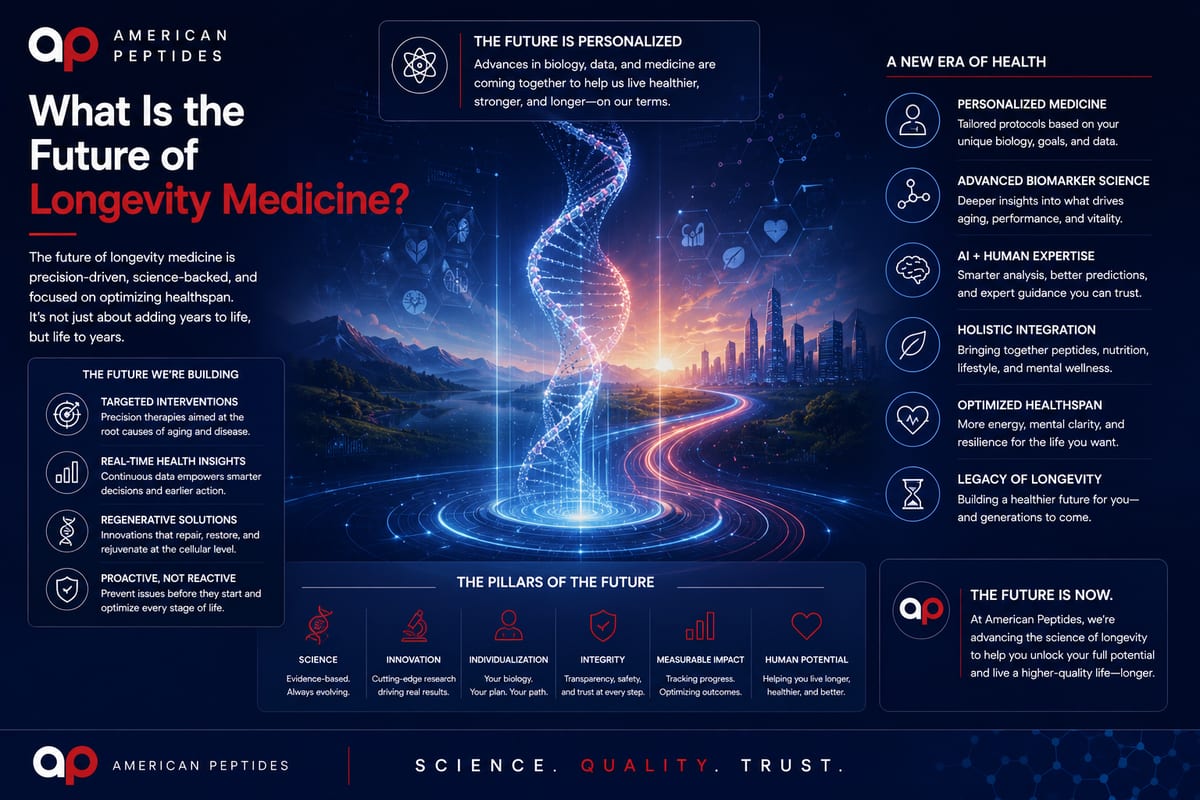
The trend toward measuring recovery sits inside the broader move toward measured, preventive thinking covered in preventive health science and the future of longevity medicine — conceptual links, not claims.
The interpretation boundary
Recovery becoming a metric does not imply any compound, including any product offered here, affects recovery or performance. The shift is about measurement and framing, not intervention effects, which are a separate rigorous question.
Why the shift is worth understanding
As education, recognizing that “recovery” became a metric because it became measurable demystifies a lot of performance marketing and reframes it as a measurement story.
How a feeling becomes a number people act on
The progression is consistent across domains: a vague quality is given an operational definition, a repeatable method makes successive measurements comparable, a baseline gives them a reference, and suddenly there is a trajectory worth watching. Recovery followed exactly that path, which is why it migrated from an afterthought into something tracked alongside other readouts. The important nuance is that becoming a metric does not change the underlying biology — it changes what is visible. A trajectory that was always there becomes legible. This is the same transformation described in recovery as a measured variable and mirrored in trend-based monitoring: measurement does not create the phenomenon, it exposes it for interpretation.
Why a single recovery reading misleads
Because recovery is a return-toward-baseline trajectory, any one reading is a position without a direction — uninterpretable on its own, exactly like an isolated lab value or inflammation biomarker. The metric is the curve, not the point. This is also why the disciplined framing refuses to convert “recovery is now measurable” into “X improves recovery”: measurement and intervention-effect are different claims, the latter requiring evidence this framing does not provide. Recognizing recovery as a measurement-and-framing story — connected to preventive health science — is what keeps it scientifically honest and resistant to performance marketing.
The durable framing
The honest summary is narrow and stable: recovery became a metric because measurement made an existing biological trajectory visible, not because measurement changed it. That distinction governs everything downstream — it is why a single reading is uninterpretable without baseline and direction, why the metric is the curve rather than the point, and why “measurable” never licenses “improvable by X.” Held alongside recovery as a measured variable and preventive health science, the topic becomes a measurement-literacy lesson rather than a performance pitch, and nothing here implies any product affects recovery or performance in people — that is a separate, evidence-bound question for licensed professionals.
Why this matters for reading the field
The reason this distinction is worth laboring is that performance and wellness marketing routinely sells “recovery” as a benefit you can buy, leaning on the credibility that measurement confers. Seeing clearly that measurement exposes a trajectory rather than improving it is the inoculation: it lets a reader accept the genuine science — recovery is a real, trackable curve connected to defined measurement and trend monitoring — while rejecting the unearned leap to product claims. That critical-reading capability, not any recommendation, is the entire point of the explainer.
Frequently Asked Questions
Why is recovery becoming a performance metric?
Because it can increasingly be measured as a defined variable, and consistently measurable things can be tracked and treated as metrics.
What turns a variable into a metric?
A definition, a method, a baseline, and ongoing tracking — at which point it can inform decisions rather than remain a vague feeling.
Why must recovery be read as a trend?
Because a single recovery reading without baseline and context is uninterpretable, exactly like a single lab value or biomarker.
How does research treat recovery metrics?
As defined endpoints in controlled studies; observed changes describe the studied system, not human performance outcomes.
Does any product improve recovery or performance?
This article makes no such claim. It explains a measurement-driven trend, not intervention effects.
How does this connect to preventive health?
It is part of the broader move toward measured, preventive thinking — a conceptual link, not a claim about any product.
Is this training or medical advice?
No. It is an educational overview of a conceptual shift, not advice or a treatment claim.
Related Optimization Protocols
Reviewed by the American Peptides Education Team. Educational content only — not medical advice.
For research and educational use only. Not a drug, supplement, food, or medical product. Nothing here is medical, training, or performance advice, or a health outcome claim.
Related reading: For the biology behind why rest drives recovery — and how this research fits into it — see The Biology of Sleep and Recovery: How Rest Repairs the Body.