
What Is a Peptide? A Researcher's Primer on Structure and Signaling
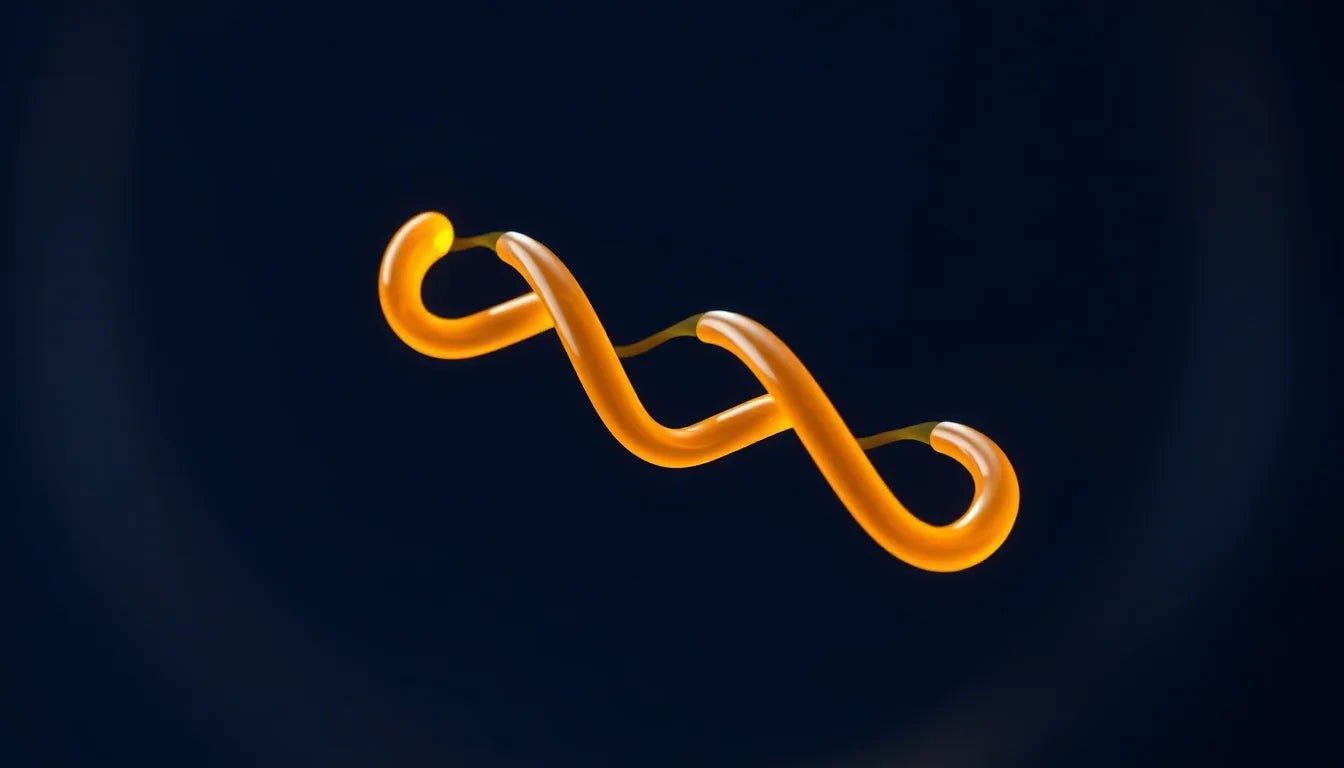
What is a peptide? A peptide is a short chain of amino acids linked together by peptide bonds. The chain length distinguishes peptides from proteins: peptides are conventionally defined as chains of fewer than ~50 amino acids, while proteins are longer. Peptides occupy a chemical middle ground between small molecules and proteins — large enough to fold into defined three-dimensional shapes and recognize specific molecular targets, but small enough to be synthesized chemically rather than expressed biologically.
What is a peptide?
A peptide is a linear chain of amino acid residues linked by peptide bonds — covalent amide bonds formed when the carboxyl group of one amino acid condenses with the amino group of the next, releasing water in the process. The chain has a defined sequence, a defined direction (N-terminus to C-terminus), and a defined chemical identity that emerges from the specific amino acids in the specific order they appear.
This simple architecture produces an enormous diversity of molecular function. With 20 standard amino acids available at each position, a 10-residue peptide has 20¹⁰ ≈ 10 trillion possible sequences. Each unique sequence produces a unique molecule with unique chemical properties, unique conformational preferences, and unique potential to recognize specific biological targets. The peptide is the smallest unit of biological information that can encode molecular specificity.
The chemistry of the peptide bond
The peptide bond is what physically links amino acids into a chain. Chemically, it is an amide bond between the carboxyl group (–COOH) of one amino acid and the amino group (–NH₂) of the next:
   Amino acid 1                          Amino acid 2

   H₂N–CH(R₁)–COOH      +     H₂N–CH(R₂)–COOH

                  │
                  ▼  (condensation, –H₂O)
                  │

   H₂N–CH(R₁)–C(=O)–NH–CH(R₂)–COOH
              └────── peptide bond ──────┘
The peptide bond has three important physical properties that govern peptide structure:
Planarity. Resonance between the carbonyl oxygen and the amide nitrogen forces the six atoms of the peptide bond (the two flanking α-carbons, the carbonyl carbon and oxygen, and the amide nitrogen and hydrogen) into a single plane. This planar constraint is what makes peptide secondary structure (α-helices, β-sheets) possible.
Limited rotation. The peptide bond itself does not rotate. Rotation in a peptide chain happens only around the α-carbon bonds adjacent to each peptide bond (the φ and ψ angles of the Ramachandran plot).
Trans preference. The two substituents on either side of the peptide bond strongly prefer the trans configuration. Proline is the major exception — its cyclic side chain makes cis configurations more energetically accessible, and proline-rich sequences often show conformational behavior that other peptides do not.
Amino acids — the alphabet of peptides
Twenty standard amino acids appear in proteins and most natural peptides. Each has the same backbone (α-carbon flanked by an amino group, a carboxyl group, and a hydrogen) and a unique side chain (the "R group") that gives it distinctive chemical properties.
The amino acids cluster into chemical categories:
| Category | Members | Properties |
|---|---|---|
| Nonpolar / aliphatic | Gly, Ala, Val, Leu, Ile, Pro | Hydrophobic; tend to pack inside folded structures |
| Aromatic | Phe, Tyr, Trp | Hydrophobic + UV-absorbing |
| Polar uncharged | Ser, Thr, Asn, Gln, Cys, Met | Hydrogen bond donors/acceptors |
| Positively charged | Lys, Arg, His | Basic side chains, positive at physiological pH |
| Negatively charged | Asp, Glu | Acidic side chains, negative at physiological pH |
Peptide vs. polypeptide vs. protein
The three terms describe chains of different lengths along a continuum:
- Peptide — conventionally a chain of < ~50 amino acids
- Polypeptide — a longer linear chain; often used as a structural intermediate term for protein subunits
- Protein — a folded macromolecule, often containing > 50 residues and frequently composed of multiple polypeptide chains
The physical distinction that matters more than length is folded state. A short peptide may exist as an unstructured chain in solution; a small protein typically folds into a defined three-dimensional structure. Some peptides do fold, especially when they contain stabilizing motifs like disulfide bonds or pre-organized cyclic structures. The conformational behavior, not just the residue count, drives biological function.
Primary, secondary, tertiary structure
Peptide structure is described at four hierarchical levels:
Primary structure is the linear amino acid sequence. This is what an HPLC purification and LC-MS identity confirm.
Secondary structure is the local folding pattern. The two dominant secondary structures are the α-helix (a right-handed coil stabilized by hydrogen bonds between residue i and residue i+4) and the β-sheet (extended strands held parallel or anti-parallel by inter-strand hydrogen bonds). Short peptides may show partial secondary structure in solution or only adopt structured forms when bound to their targets.
Tertiary structure is the overall three-dimensional shape — how the secondary structure elements fold together in space. Most peptides have minimal tertiary structure; this level becomes meaningful for proteins.
Quaternary structure is the assembly of multiple folded subunits into a complex. Relevant for some proteins; not relevant for most peptides.
For research peptides, primary structure is the analytical anchor — sequence determines identity, sequence determines mass, and sequence largely determines function.
Why peptides occupy a unique chemical niche
Peptides sit in a chemical middle ground that small molecules and proteins cannot fill:
Compared to small molecules, peptides are large enough to make multiple specific contacts with a target surface. Small-molecule drug discovery often struggles to engage "undruggable" targets like flat protein-protein interaction interfaces; peptides can extend across larger surface areas and achieve high specificity through multiple weak contacts that sum to strong binding.
Compared to proteins, peptides are small enough to be synthesized chemically rather than expressed biologically. This enables precise control over sequence (including non-natural amino acids), modifications (cyclization, conjugation, PEGylation), and labeling (fluorescent tags, biotin, isotopic labels). Chemical synthesis also avoids the complications of recombinant expression: codon optimization, host cell biology, purification from cell lysates.
Compared to either, peptides have intermediate stability. Small molecules typically have long shelf lives and circulating half-lives; proteins fold tightly and resist degradation; peptides are vulnerable to oxidation, deamidation, and proteolytic cleavage but can be engineered for stability through modifications.
This middle position is why peptides are increasingly central to both fundamental research and pharmaceutical development.
Peptides as signaling molecules
In biology, peptides function as signaling molecules — chemical messengers that carry information between cells. They are secreted by one cell, travel through the extracellular space, and bind to receptors on target cells to trigger specific responses.
Peptide signaling has several characteristic features:
- High specificity. Peptide-receptor pairs typically bind with high affinity (nanomolar or better) and high specificity, recognizing only the intended target among the thousands of cell-surface molecules.
- Rapid action. Signaling peptides typically have short half-lives in circulation, enabling on-demand signaling without persistent background activation.
- Receptor-mediated effects. Most peptide signaling occurs through G-protein-coupled receptors (GPCRs) or receptor tyrosine kinases, both of which we cover in detail in our receptor biology primer.
Peptides as research tools
For laboratory research, peptides serve several distinct functions:
Mimics of endogenous signaling molecules. Synthetic peptides corresponding to natural signaling peptides allow controlled study of those signaling systems in vitro and in vivo.
Receptor probes. Modified peptide analogs can serve as receptor agonists, antagonists, or partial agonists, dissecting the structural requirements for receptor binding and activation.
Substrates for enzymes. Synthetic peptides containing specific sequences serve as defined substrates for proteases, kinases, and other enzymes, enabling quantitative enzyme activity measurement.
Affinity reagents. Peptides that bind specific targets serve as the basis for purification (affinity chromatography), detection (peptide-conjugated antibody alternatives), and imaging (fluorescent peptide probes).
Tools for structural biology. Synthetic peptides with defined isotopic labels enable NMR and mass spectrometry studies of conformational dynamics.
Synthetic vs. natural peptides
Most research peptides are chemically synthesized via SPPS rather than isolated from natural sources. The chemical synthesis route offers:
- Sequence control — exact specification of the linear sequence, including non-natural amino acids
- Purity control — analytical-grade purity (≥95–99%) achievable through HPLC purification
- Modification access — N-terminal acetylation, C-terminal amidation, cyclization, conjugation, fluorescent or biotin labels
- Reproducibility — every batch synthesized to the same specifications, with COA documentation
- Scale flexibility — milligrams for research, grams for preclinical work, kilograms for late-stage development
Frequently asked questions
What is the difference between a peptide and a protein?
The distinction is primarily length. Peptides are conventionally chains of fewer than ~50 amino acids; proteins are longer. The boundary is not strict. A more practical distinction is folded state: proteins typically adopt defined three-dimensional structures, while many short peptides exist as flexible chains in solution.
How many amino acids are in a typical peptide?
Research peptides typically range from 3 to 50 amino acids. The most heavily studied bioactive peptides cluster in the 5–30 residue range. Above ~50 residues, chemical synthesis becomes increasingly challenging and biological expression becomes more practical.
What is the difference between an amino acid and a peptide?
An amino acid is a single building block — one molecule with one amino group and one carboxyl group. A peptide is two or more amino acids joined by peptide bonds. A two-amino-acid peptide is called a dipeptide; three is a tripeptide; many is a polypeptide.
Why do peptides need to be refrigerated?
Peptides are susceptible to chemical degradation pathways (oxidation, deamidation, hydrolysis) that are accelerated by temperature. Cold storage slows these reactions dramatically. Lyophilized peptides at -20°C can remain stable for years; the same peptide at room temperature in solution may degrade within days.
Are peptides the same as hormones?
Many hormones are peptides (insulin, oxytocin, glucagon, GLP-1), but not all peptides are hormones. Hormones are signaling molecules that travel through the bloodstream to act on distant tissues. Peptides serve many other roles beyond hormonal signaling — local signaling, enzyme substrates, structural components, antimicrobial defense.
What does N-terminus and C-terminus mean?
A peptide chain has two ends. The N-terminus (amino-terminus) is the end with a free amino group (–NH₂). The C-terminus (carboxyl-terminus) is the end with a free carboxyl group (–COOH). Peptide sequences are conventionally written N-terminus to C-terminus.
Why are some peptides cyclic?
Some natural peptides and many synthetic research peptides are cyclic — the two ends of the chain are linked, forming a ring. Cyclization confers resistance to proteolytic degradation, locks the peptide into a specific conformation, and often raises binding affinity for the target.
Key takeaways
- A peptide is a short chain of amino acids linked by peptide bonds (covalent amide bonds), conventionally fewer than ~50 residues.
- The peptide bond is planar, rotation-restricted, and strongly prefers the trans configuration — properties that shape peptide structure.
- Twenty standard amino acids provide the chemical alphabet; their arrangement determines peptide properties.
- Peptides occupy a chemical middle ground between small molecules and proteins, large enough for specific binding but small enough for chemical synthesis.
- In biology, peptides function as signaling molecules through high-specificity, rapid-action receptor binding.
- In research, peptides serve as signaling mimics, receptor probes, enzyme substrates, affinity reagents, and structural biology tools.
- Modern research peptides are typically synthesized chemically via SPPS, providing precise sequence control and analytical-grade purity.
- Primary structure (linear sequence) is the analytical anchor; secondary, tertiary, and quaternary structure describe higher-order folding.
Related reading
- Solid-phase peptide synthesis (SPPS): a researcher's visual guide
- Amino acid signaling and receptor biology: a research primer
- Glossary: 50 peptide and analytical chemistry terms
Related research