BPC 157 is a 15-residue synthetic peptide whose sequence comes from a larger gastric-juice protein, the so-called body protection compound. Its originating lab describes it as unusually stable in acidic, enzyme-rich media, which makes a solid tablet format an interesting question for a chemist. This article covers the sequence and its physicochemical features, what the primary literature actually reports about stability in gastric-juice media, what the general solid-state peptide stability literature says about degradation routes in dry formats, and what a researcher should verify on a tablet lot. It is written for researchers comparing a solid, immediate-release format with lyophilized powder.
Research-use-only context. This article summarizes published third-party scientific literature — the large majority of it conducted in cultured cells or animal models. It is not medical advice, not a therapeutic or performance claim, and not a usage guide. American Peptides products are sold strictly for in vitro laboratory research and are not for human or veterinary use.
The sequence and why it matters for stability
Fifteen residues, no sulfur, no aromatic side chains
BPC 157 has the sequence Gly-Glu-Pro-Pro-Pro-Gly-Lys-Pro-Ala-Asp-Asp-Ala-Gly-Leu-Val, a molecular weight near 1,419 Da, and a net negative charge at neutral pH from its one glutamate and two aspartates against a single lysine. The composition is notable for what is missing. There is no cysteine and no methionine, the two residues that account for most oxidative damage in peptides, and no tryptophan, tyrosine or histidine, the next tier of oxidation-prone side chains.
What that implies on paper
Manning and colleagues, in their 2010 Pharmaceutical Research update on protein pharmaceutical stability, group chemical instability into deamidation, oxidation, hydrolysis, beta-elimination, racemization and cross-linking, and they identify Met, Cys, His, Trp and Tyr as the oxidation hot spots. A sequence with none of those residues has, in principle, very few oxidation pathways open to it. BPC 157 also has no asparagine or glutamine, so classical deamidation to Asp or Glu is not available either. That leaves the acidic residues themselves, and the lysine, as the chemistry to watch. We did not locate a peer-reviewed solid-state stability study specific to BPC 157, so everything in this section is structural inference from the general literature, not a measured result on this peptide.
Stability in gastric-juice and aqueous media: what the papers say
The Sikiric group's repeated claim
The stability statement most often quoted about BPC 157 comes from Predrag Sikiric's group at the University of Zagreb, which has published on the peptide for three decades. In a 2020 Current Pharmaceutical Design review on fistula models, the authors write that BPC 157 is "native to and stable in human gastric juice (for more than 24 h)". Their 2018 review in the same journal, on vascular recruitment and gastrointestinal healing in rat models, describes the peptide as "native in human gastric juice while maintaining GI-tract mucosal integrity". These are the group's own characterizations rather than a stand-alone analytical paper, and to our knowledge the claim has not been replicated by an independent lab with published HPLC time-course data.
Reading the claim as a chemist
Gastric juice is roughly pH 1 to 3 and contains pepsin. Pepsin prefers to cleave on the carboxyl side of large hydrophobic and aromatic residues, especially Phe, Leu, Trp and Tyr. BPC 157 has one leucine, near the C-terminus, and no aromatic residues at all. Its three consecutive prolines are poor pepsin substrates, so the sequence is consistent with the reported pepsin resistance. Acid-catalyzed hydrolysis in solution is a separate matter: the Asp-Pro bond is the classic acid-labile peptide bond, and BPC 157 does not contain one. The published 24-hour statement is therefore plausible on structural grounds, but a researcher who needs the number should measure it on their own lot.
Solid-state peptide degradation: the general literature
Moisture is the master variable
Lai and Topp's 1999 review in the Journal of Pharmaceutical Sciences, "Solid-state chemical stability of proteins and peptides", remains the standard reference. They catalogue the reactions that still proceed in a dry powder or compressed matrix: deamidation, peptide-bond cleavage, oxidation, the Maillard reaction with reducing sugars, beta-elimination, and dimerization or aggregation. Their central point is that none of these reactions stops in the solid state; they slow, and how much they slow depends on temperature, residual moisture, excipient choice, and whether the peptide sits in an amorphous or crystalline phase. Water acts as both reactant and plasticizer, which is why residual moisture is the first thing a formulator controls.
Aspartimide formation and isoaspartate
Reissner and Aswad's 2003 review in Cellular and Molecular Life Sciences lays out the mechanism most relevant to an Asp-rich sequence like BPC 157. The backbone nitrogen of the residue following an aspartate attacks the Asp side-chain carbonyl, forming a five-membered succinimide (aspartimide) ring. The ring then hydrolyzes to a mixture of the original alpha-linked aspartate and the beta-linked isoaspartate, typically about three to one in favor of the isoAsp product. The rate depends strongly on the residue following the Asp: glycine and serine are fastest, alanine is intermediate, and bulky or branched residues are slow. In BPC 157 the relevant junctions are Asp-Asp and Asp-Ala, both of which are moderate rather than fast. Isoaspartate has the same mass as aspartate, so it appears only as a shoulder or shifted peak on reverse-phase HPLC, not as a mass shift. Lai and Topp note that succinimide formation is one of the reactions that continues in dry solids, especially at elevated humidity and in amorphous matrices, so it is the degradation route a lab should look for first on an aged BPC 157 tablet lot.
The lysine and the excipient question
The single lysine at position 7 is the one residue in BPC 157 that can participate in the Maillard reaction. Lai and Topp describe this reaction between amine groups and reducing sugars as a real solid-state concern in lactose-containing formulations. A tablet built on non-reducing diluents such as mannitol or microcrystalline cellulose removes the pathway entirely, so the diluent is worth asking about.
A short pharmacology summary, with attribution
Rat tendon fibroblast work
The bench study most often cited for BPC 157's cellular activity is Chang and colleagues' 2011 paper in the Journal of Applied Physiology. Using tendon explants and tendon fibroblasts derived from rat Achilles tendon, the authors reported that BPC 157 accelerated outgrowth of cells from the explant, did not change proliferation on an MTT assay, improved cell survival under hydrogen peroxide stress, and increased fibroblast migration and spreading in a concentration-dependent manner. They attributed the effect to activation of the FAK-paxillin pathway, shown by Western blot. This is an ex vivo and in vitro model in rat tissue.
What the reviewers say about the evidence base
Gwyer, Wragg and Wilson's 2019 review in Cell and Tissue Research surveyed the soft-tissue literature on BPC 157 and reached two conclusions that researchers should keep together. First, that the published animal studies reported consistently positive results across tendon, ligament and muscle injury models. Second, that "the majority of studies have been performed on small rodent models", that efficacy "is yet to be confirmed in humans", and that only a handful of research groups have studied the peptide in depth. The Sikiric reviews describe effects across many rat organ-injury models and refer to clinical trials in ulcerative colitis; those are the authors' statements, and no efficacy conclusion is drawn here.
Where the evidence stops
BPC 157 is investigational. It is not approved by the FDA for any purpose, and no regulatory agency has reviewed its safety or efficacy. The pharmacology literature is dominated by a single research group and by rodent models, a limitation the 2019 Loughborough review states plainly. The gastric-juice stability claim comes from that same group and has no independent analytical time-course behind it. There is no peer-reviewed solid-state stability study of BPC 157 in any tablet matrix; the aspartimide, Maillard and moisture points above are inferences from general peptide chemistry and should be read as a checklist for what to measure. Nothing in this article speaks to how the peptide behaves in a living organism.
Solid format: what researchers check
A tablet is a compressed solid matrix of peptide plus diluent, disintegrant and lubricant. At the bench there is no reconstitution step and each unit is a fixed, lot-tested quantity. The strength per tablet is listed on the product page. Here is what a researcher verifies on a lot.
- Identity and HPLC assay. Reverse-phase HPLC against a reference standard confirms the main peak and quantifies peptide content as a percentage of label. For an Asp-rich sequence, look specifically for a shoulder or a late-eluting shadow peak that could indicate isoaspartate or succinimide intermediates. Mass spectrometry confirms the 1,419 Da parent and flags any mass shift.
- Content uniformity. Because the peptide is a small fraction of the tablet mass, pharmacopoeial testing assays ten individual tablets and reports an acceptance value; a tight spread means blending and compression were well controlled.
- Disintegration and dissolution. An immediate-release tablet should disintegrate in aqueous media within minutes and release its peptide in a dissolution test. This is a specification check, not a biological one: a tablet dropped into buffer should deliver its labeled content into solution in a predictable time.
- Moisture and packaging. Ask for loss-on-drying or Karl Fischer water content on the lot, and store the bottle closed with its desiccant, away from light.
- Excipient list. Confirm the diluent is non-reducing, for the lysine reason discussed above.
- Certificate of analysis by lot. Every lot should ship with a COA that reports the above, dated, with the lot number matching the bottle.
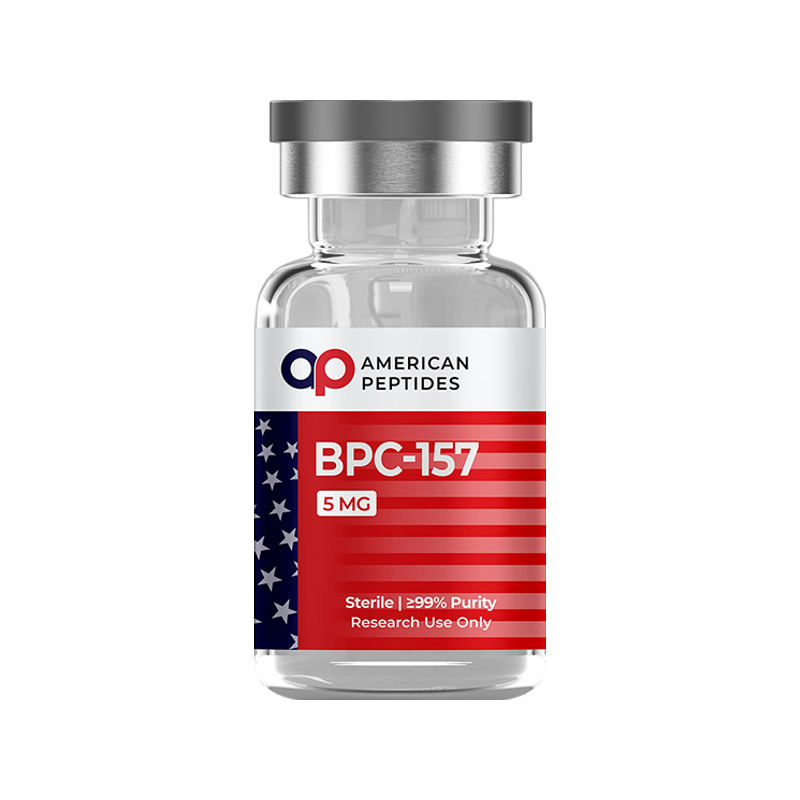
American Peptides lists BPC-157 Tablets as a single-peptide solid research format, and BPC-157 / KPV / Larazotide Tablets as a three-peptide blend in the same format. Both are part of the Tablets collection, each 30 tablets per bottle and tested by lot. For the broader cell and animal literature on the compound itself, see our earlier review, BPC-157 Research Evidence: What the Studies Show.
Frequently Asked Questions
Is BPC 157 approved by the FDA?
No. BPC 157 is an investigational peptide. It is not approved by the FDA for any purpose, and no regulatory agency has evaluated it. The published pharmacology is almost entirely rodent and cell-culture work from a small number of research groups, as the 2019 Cell and Tissue Research review notes. American Peptides sells it strictly for in vitro laboratory research.
Which papers report that BPC 157 is stable in gastric juice for 24 hours?
The clearest statement is in Sikiric and colleagues' 2020 Current Pharmaceutical Design review (PMID 32329684), which describes BPC 157 as "stable in human gastric juice (for more than 24 h)". The group's 2018 review in the same journal (PMID 29879879) calls it "native in human gastric juice". Both are the originating lab's characterizations, not independent analytical studies.
What degradation should a lab look for on an aged BPC 157 tablet lot?
Aspartimide (succinimide) formation at the Asp-Asp-Ala stretch, which hydrolyzes to isoaspartate and appears as a shoulder or shifted peak on reverse-phase HPLC with no mass change. Also check for Maillard adducts at the lysine if the diluent is a reducing sugar. Oxidation is unlikely because the sequence has no Cys, Met, Trp, Tyr or His.
How does a tablet format differ from lyophilized powder at the bench?
A tablet is a compressed, lot-tested unit with no reconstitution step, so weighing and dissolving errors are removed and each unit carries a fixed labeled content. Lyophilized powder offers flexibility in concentration but adds handling variables. Both should ship with a lot COA reporting HPLC assay, and tablets should additionally report content uniformity and disintegration.
Citations
- Sikiric P, Rucman R, Turkovic B, et al. Novel cytoprotective mediator, stable gastric pentadecapeptide BPC 157. Vascular recruitment and gastrointestinal tract healing. Curr Pharm Des 2018. PMID 29879879
- Sikiric P, Drmic D, Sever M, et al. Fistulas healing. Stable gastric pentadecapeptide BPC 157 therapy. Curr Pharm Des 2020. PMID 32329684
- Chang CH, Tsai WC, Lin MS, Hsu YH, Pang JH. The promoting effect of pentadecapeptide BPC 157 on tendon healing involves tendon outgrowth, cell survival, and cell migration. J Appl Physiol 2011. PMID 21030672
- Gwyer D, Wragg NM, Wilson SL. Gastric pentadecapeptide body protection compound BPC 157 and its role in accelerating musculoskeletal soft tissue healing. Cell Tissue Res 2019. PMID 30915550
- Manning MC, Chou DK, Murphy BM, Payne RW, Katayama DS. Stability of protein pharmaceuticals: an update. Pharm Res 2010. PMID 20143256
- Lai MC, Topp EM. Solid-state chemical stability of proteins and peptides. J Pharm Sci 1999. PMID 10229638
- Reissner KJ, Aswad DW. Deamidation and isoaspartate formation in proteins: unwanted alterations or surreptitious signals? Cell Mol Life Sci 2003. PMID 12943218
This article is for laboratory research reference only. American Peptides products are sold strictly for in vitro research. Not for human consumption.
Related research
- BPC-157 Research: What the Published Studies Actually Show
- What Reddit Says About BPC-157 (and What the Studies Actually Show)
- The KLOW Research Blend (GHK-Cu, BPC-157, TB-500, KPV): What the Component Studies Show
- PT-141 Research: What the Studies Actually Show
- Pinealon Research: What the Studies Actually Show
Compliance Notice: American Peptides products are sold strictly for laboratory and academic research purposes only. They are not intended for human or veterinary consumption, diagnosis, treatment, or prevention of any disease. All content on this page is educational in nature and does not constitute medical advice or product claims. Researchers are responsible for handling these compounds in accordance with their institution’s safety protocols and applicable laws.