Type "BPC-157" into a search bar and the autocomplete adds "reddit" almost immediately. Searchers want unfiltered opinions rather than a vendor page or an abstract. This roundup reads across an archived r/climbharder "case study" post from 2024, r/Peptides experience threads from 2021 and 2023, a 2026 r/IAmA session with a science journalist who spent four months reporting on the compound, and 2025–2026 threads in r/bpc_157, r/crossfit, r/ACL and r/fitness40plus. The back half checks the recurring themes against the published literature, which is almost entirely cultured-cell and rodent work.
Research-use-only context. This article summarizes published third-party scientific literature — the large majority of it conducted in cultured cells or animal models. It is not medical advice, not a therapeutic or performance claim, and not a usage guide. American Peptides products are sold strictly for in vitro laboratory research and are not for human or veterinary use.
What Reddit threads say about BPC-157
One framing note first. Much of the discussion is personal protocols for tendon or gut complaints, which this article does not reproduce. What follows are the themes that survive once that material is set aside.
Why interest is so high
BPC-157 (Body Protection Compound 157) is a 15-residue fragment of a protein found in human gastric juice. The Reddit shorthand for it is "the healing peptide," and the subreddits where it appears explain the interest: climbers with finger pulley problems, CrossFit posters with elbow complaints, r/ACL, r/fitness40plus. The common thread is slow-recovering connective tissue and the hope that rat tendon findings carry over. Commenters in the 2026 r/IAmA thread also point to policy news — removal from compounding, public figures arguing for "enforcement discretion" — as a reason it keeps trending. Reddit also pairs it with TB-500 as the so-called "BPC-157 + TB-500 stack," a phrase that shows up as its own search; American Peptides lists a research-grade BPC-157 and TB-500 pairing for that reason.
The Croatian lab, and the "one group" problem
The most substantive Reddit conversation about BPC-157 is about provenance, not results. The journalist hosting the 2026 r/IAmA session summarized her reporting: the story begins in a pharmacology laboratory at the University of Zagreb led by Predrag Sikiric, whose team has published more than 150 papers on it. The top-voted question was blunt.
"How legit is the Croatian research? Like, 150 papers from basically one lab feels like a lot, is that normal or kind of a red flag?" — r/IAmA, 2026
Replies split. Some noted it is normal for the discovering group to do most early work, and that a Taiwan-based group has reported positive findings independently. Others flagged that the lead researcher is named on BPC-157 patents and argued that work concentrated in a few journals from one institution deserves more caution than its volume suggests. An earlier r/IAmA thread, "I spent a week with the Croatian research team," covered the same ground.
Sourcing and purity worries
The second serious theme is where the material comes from. In the r/climbharder thread, the original poster reported unexpected swelling after opening a second vial, and several commenters asked whether that vial was contaminated or a bad batch. The r/IAmA journalist made the same point: with no regulated supply, the risk is not only the compound but whatever else is in an unlabeled gray-market vial. Posters who have thought about it ask for third-party certificates of analysis and lot numbers; those who have not report "it did nothing" or "something odd happened" with no way to tell which explanation fits.
The oral-versus-other argument
Because the literature describes BPC-157 as stable in gastric juice, a frequent argument on r/bpc_157 (for example, a 2025 thread titled "my experience with oral bpc") is whether that stability makes every form of exposure equivalent. The threads do not settle it and this article takes no position.
Skepticism and the "did nothing" camp
Reddit is not uniformly enthusiastic. The highest-scoring r/climbharder comment asked whether a compound with no human trials, no approval by the FDA, and a place on the World Anti-Doping Agency prohibited list was worth the risk at all; another linked the USADA notice. A later comment went after the logic of the anecdotes themselves.
"The actual literature isn't that substantial and published in low quality journals with little in the way of replication. People often gloss over this fact." — r/climbharder, 2024
That commenter's point — two tendon problems that feel alike may be different injuries, so a faster recovery proves nothing on its own — echoes across r/crossfit and r/fitness40plus. A 2021 r/Peptides thread logged effects the poster considered unusual, and the one reply questioned whether any were attributable to the compound. Asked directly whether BPC-157 works, the 2026 journalist answered: "we don't know."
What the published studies actually show
The literature is large but narrow: one group accounts for most of it, almost all of it is in rodents or cell culture, and outside reviewers say so plainly. Here is what the frequently cited papers report.
Tendon: fibroblast outgrowth and migration in culture
The paper Redditors most often reach for when they say "there is tendon data" is a 2011 Journal of Applied Physiology study by Chang and colleagues in Taiwan. Using rat Achilles tendon explants, the authors reported that BPC-157 accelerated the outgrowth of tendon fibroblasts from the explant, increased fibroblast survival under hydrogen-peroxide stress, and increased fibroblast migration and spreading in a concentration-dependent way. Proliferation itself was not changed in the MTT assay. They tied the effect to phosphorylation of FAK and paxillin, two adhesion-signaling proteins. It is a culture-dish study: cell behavior, not a repaired tendon in an animal.
The in-vivo tendon paper is older: a 2003 Journal of Orthopaedic Research study by Staresinic and the Zagreb group reported higher load-to-failure, better functional index scores and more organized collagen in rats with a transected Achilles tendon versus saline controls, and that in culture the compound opposed 4-hydroxynonenal's growth inhibition of tendocytes.
Angiogenesis and the VEGFR2 pathway
Reddit's "it helps blood flow to the tendon" line traces to a 2017 Journal of Molecular Medicine study by Hsieh and colleagues, again from Taiwan. In a chick chorioallantoic membrane assay and in endothelial-cell tube-formation assays, BPC-157 increased vessel formation; in a rat hindlimb ischemia model it was associated with faster recovery of blood flow. The authors reported that BPC-157 promoted internalization of VEGFR2 and activation of the VEGFR2–Akt–eNOS signaling axis. The 2026 r/IAmA host noted that the Zagreb group prefers to say BPC-157 "modulates" rather than "promotes" vessel growth, a distinction relevant to the cancer questions that appear in nearly every thread.
The nitric-oxide system and the Zagreb reviews
Much of the Croatian output is review. A 2014 Current Pharmaceutical Design review by Sikiric and colleagues collects the group's work on BPC-157 and the nitric-oxide system, describing interaction with both L-NAME and L-arginine across rodent models of gastric lesions, vascular disturbance and fistula healing, while conceding that how this "may be practically translated into an enhanced clinical performance remains to be determined." Two 2018 reviews in the same journal — Seiwerth on BPC-157 alongside standard angiogenic growth factors in gastrointestinal, tendon, ligament, muscle and bone models, and Sikiric on vascular recruitment — frame the compound as a "cytoprotective mediator." A 2016 Current Neuropharmacology review and a 2022 Neural Regeneration Research review by Vukojevic extend the group's rat findings to the brain–gut axis and central nervous system models.
The one frequently cited review from outside the group is a 2019 Cell and Tissue Research paper by Gwyer, Wragg and Wilson at Loughborough University. It reports that every study located showed positive effects in soft-tissue models, then states the limits: "the majority of studies have been performed on small rodent models," efficacy "is yet to be confirmed in humans," and "only a handful of research groups have performed in-depth studies regarding this peptide." That is the Reddit skeptic's argument, in a peer-reviewed journal.
Where Reddit and the research disagree
The gap is simple to state. Reddit reasons from individual recovery stories; the literature is rat and cell-culture work from a small number of laboratories. Human controlled data are essentially absent. A 2003 paper mentions an inflammatory bowel disease trial under a Pliva code and a 2016 review mentions a multiple sclerosis trial, but no randomized, controlled human results for tendon, ligament or muscle have been published, as the 2026 journalist confirmed. BPC-157 is not approved by the FDA for any use, has been excluded from U.S. compounding, and appears on the World Anti-Doping Agency prohibited list, which is why the USADA notice is linked so often in athletic subreddits.
The disagreement also runs the other way. Reddit tends to assume the animal results are uncontested; the research is more hedged. Gwyer calls the compound "promising" and in the same paragraph says the mechanisms still need to be understood; the Zagreb group writes that clinical meaning "remains to be determined." None of this dismisses the compound as a research subject. It is a reason not to read a climbing forum as a results section.
Sourcing and verification: what researchers check
The Reddit contamination worries map onto ordinary analytical chemistry. For a 15-residue peptide, identity and purity are the two questions, both answerable on paper.
- Purity by HPLC. A reversed-phase chromatogram with the main peak's area percentage; related-substance peaks show truncated or deamidated material.
- Identity by mass spectrometry. BPC-157 (sequence GEPPPGKPADDAGLV) has a molecular weight near 1419 Da; the observed mass should match within the instrument's tolerance.
- A certificate of analysis tied to a lot number. Generic certificates that do not name the lot on the vial are the thing Reddit posters most often say they wish they had checked.
- Cold chain and handling. Lyophilized peptide ships cold and is stored frozen; in the laboratory, bacteriostatic water limits microbial growth in a reconstituted vial. A chemistry point only.
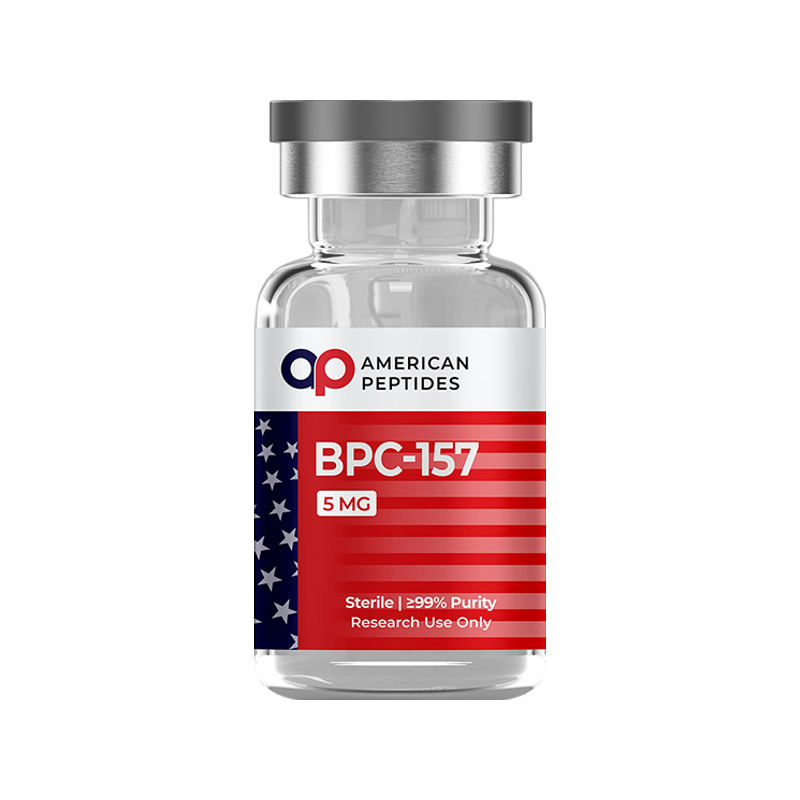
American Peptides publishes lot-matched certificates for its research-grade BPC-157; the study-by-study walkthrough is in our BPC-157 research evidence article.
Frequently Asked Questions
What does Reddit say about BPC-157?
Reddit discussion is mostly personal recovery stories about tendon and gut complaints, which this article does not reproduce. The substantive threads debate three things: whether a literature dominated by one Zagreb laboratory can be trusted, how to verify purity when supply is unregulated, and whether anecdotes prove anything when no human controlled trial exists. A 2026 r/IAmA session with a science journalist is the best single summary.
Is BPC-157 approved by the FDA?
No. BPC-157 is not approved by the FDA for any use, and the agency has excluded it from pharmacy compounding. It remains an investigational compound studied in cell culture and rodent models. American Peptides supplies it strictly for in vitro laboratory research. Reddit threads that mention "enforcement discretion" refer to a policy debate, not to an approval.
Why is BPC-157 called a gastric pentadecapeptide?
"Pentadecapeptide" means fifteen amino acids; BPC-157's sequence is GEPPPGKPADDAGLV, with a molecular weight near 1419 Da. It is a partial sequence of a protein identified in human gastric juice by the University of Zagreb group, and the Croatian papers describe it as stable in gastric juice. Its name — Body Protection Compound — comes from that group's cytoprotection hypothesis.
Is BPC-157 on the WADA prohibited list?
Yes. BPC-157 appears on the World Anti-Doping Agency prohibited list under non-approved substances, and USADA has published a notice about it that Reddit athletic communities link frequently. The compound has no human controlled data and no regulatory approval, which is the basis for the listing. It comes up in nearly every r/climbharder and r/crossfit thread.
Citations
- Chang CH et al., J Appl Physiol 2011. PMID 21030672
- Staresinic M et al., J Orthop Res 2003. PMID 14554208
- Hsieh MJ et al., J Mol Med (Berl) 2017. PMID 27847966
- Sikiric P et al., Curr Pharm Des 2014. PMID 23755725
- Seiwerth S et al., Curr Pharm Des 2018. PMID 29998800
- Sikiric P et al., Curr Pharm Des 2018. PMID 29879879
- Sikiric P et al., Curr Neuropharmacol 2016. PMID 27138887
- Gwyer D, Wragg NM, Wilson SL, Cell Tissue Res 2019. PMID 30915550
- Vukojevic J et al., Neural Regen Res 2022. PMID 34380875
This article is for laboratory research reference only. American Peptides products are sold strictly for in vitro research. Not for human consumption.
Related research
Compliance Notice: American Peptides products are sold strictly for laboratory and academic research purposes only. They are not intended for human or veterinary consumption, diagnosis, treatment, or prevention of any disease. All content on this page is educational in nature and does not constitute medical advice or product claims. Researchers are responsible for handling these compounds in accordance with their institution’s safety protocols and applicable laws.