
AOD-9604 is one of the few research peptides whose story begins with a question about a hormone rather than a disease. Human growth hormone (hGH) drives growth through insulin-like growth factor-1 (IGF-1), shifts how the body handles glucose, and changes how fat tissue stores and releases lipid. In the early 1990s a biochemistry group at Monash University in Australia asked whether the lipid-handling part of that repertoire could be mapped to one short stretch of the hormone and reproduced by a synthetic fragment. AOD-9604 is the molecule that work produced. Most of what circulates about it online is marketing built on a discontinued drug program; this summary goes back to the primary papers and sets out what they measured, in which model, and where the evidence ends. For the evidence-first format used across this series, see our ipamorelin research review.
Research-use-only context. This article summarizes published third-party scientific literature — the large majority of it conducted in cultured cells or animal models. It is not medical advice, not a therapeutic or performance claim, and not a usage guide. American Peptides products are sold strictly for in vitro laboratory research and are not for human or veterinary use.
What AOD-9604 is
Human growth hormone is a 191-residue protein, and AOD-9604 is a synthetic copy of its C-terminal tail. Cox and colleagues, in Drug Testing and Analysis, define it as the hGH fragment spanning amino acids 177–191 with one additional tyrosine at the N-terminus.1 Because that tyrosine occupies the position of residue 176, the same 16-residue molecule is frequently written as hGH 176–191. The parent 15-residue sequence — Leu-Arg-Ile-Val-Gln-Cys-Arg-Val-Ser-Glu-Gly-Ser-Cys-Gly-Phe — was published by Wu and Ng at Monash in 1993.2 Its two cysteines are joined by a disulfide bond in the native hormone, so the fragment carries a small closed loop near its C-terminal end.
The design logic is the hypothesis every later study was testing. Intact hGH acts through the growth hormone receptor, and much of its growth-promoting signaling runs through IGF-1 (see What is IGF-1?). The Monash group proposed that hGH behaves in part as a pro-hormone: distinct regions of the protein carry distinct activities, and the C-terminal region carries its effects on lipogenesis and lipolysis.3 If so, a synthetic copy of that region might reproduce the lipid-metabolic activity of the hormone without engaging the pathways responsible for growth signaling or for the glucose-handling changes intact hGH produces. The early work used the unmodified 177–191 sequence, catalogued in later Monash papers as AOD9401;4 AOD-9604, the tyrosine-extended form, is the version that carried the program forward.
What the research reports
Molecular design and the GH fragment concept
The founding observation came from Wu and Ng in 1993, in Biochemistry and Molecular Biology International. Working with epididymal fat pads from rats, they reported that the synthetic hGH 177–191 peptide had antilipogenic activity — a reduction in the formation of new lipid — identical to that of intact hGH. Just as telling was what it did not do: measured by glycerol release, the fragment showed no significant lipolytic effect in that preparation. The authors concluded that the antilipogenic domain of hGH resides in the C-terminal region, and that the main effect of the hormone on lipid metabolism is at the level of lipogenesis rather than fat breakdown.2 That is a narrower claim than the one usually made for the peptide online, and it is the one the original data support.
Receptor and signaling studies: does it act through the GH receptor?
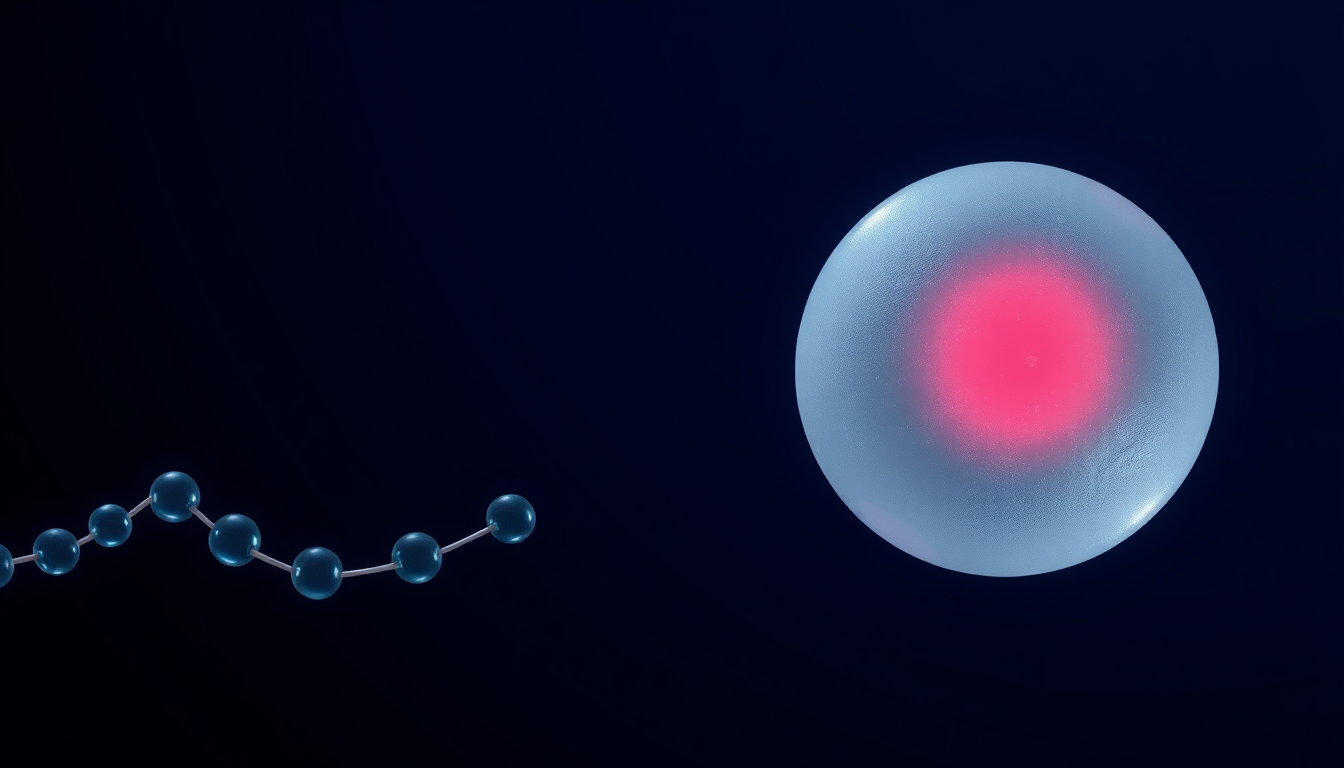
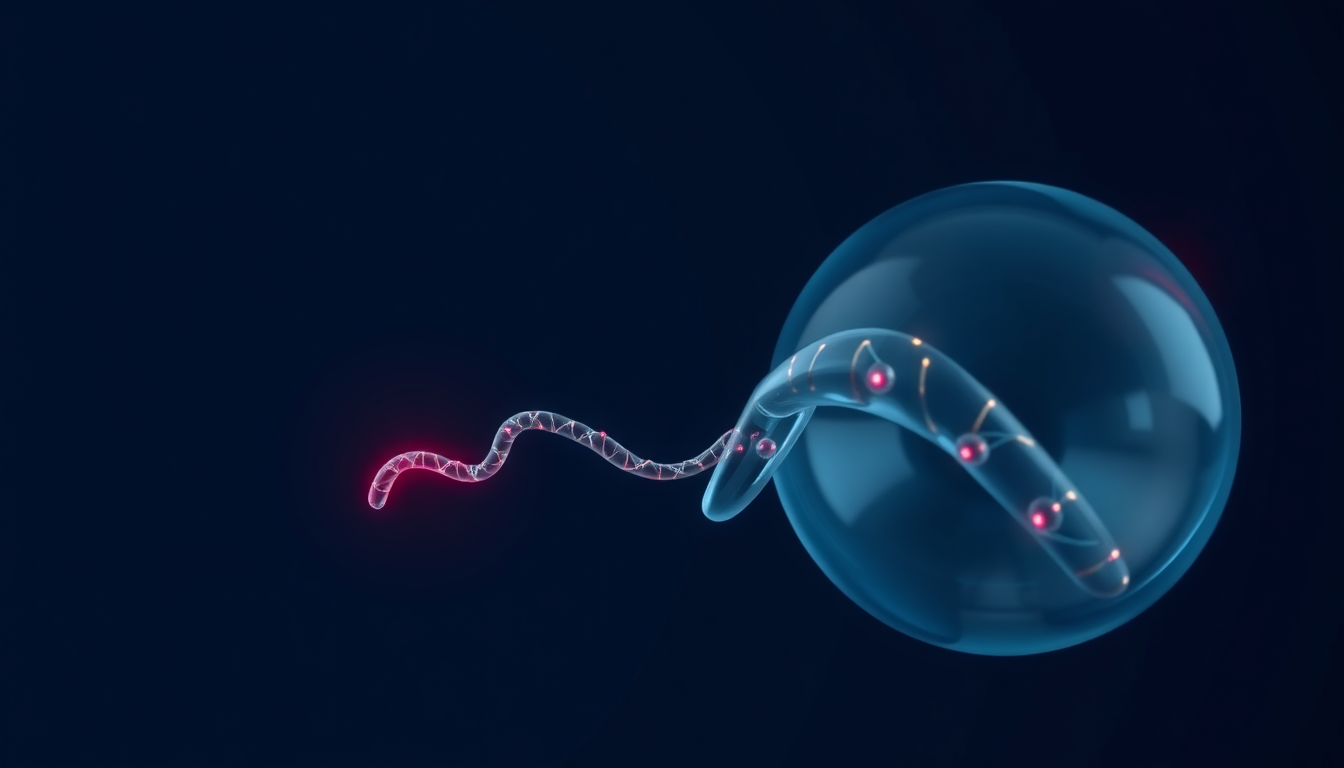
This is the central question for any GH fragment, and the Monash group addressed it directly in a 2001 paper in Int J Obes Relat Metab Disord. Heffernan and colleagues used BaF-BO3 cells transfected with the human GH receptor to run two in-vitro tests: competition with iodine-125-labelled hGH for receptor binding, and cell proliferation, a canonical downstream response to GH-receptor activation. AOD9604 did not compete for the hGH receptor and did not induce proliferation; intact hGH did both.3 The authors read this as further support for the pro-hormone concept: a fragment of hGH producing metabolic effects through a route distinct from the classical GH-receptor pathway.
If not the GH receptor, then what? A second 2001 paper, in Endocrinology, tested the beta-3 adrenergic receptor (β3-AR), the principal lipolytic receptor in fat cells. In ob/ob mice exposed to either hGH or AOD9604 for two weeks, both compounds raised β3-AR RNA expression in adipose tissue from the repressed levels typical of these animals to values comparable with lean mice. In β3-AR knock-out mice, the longer-term change in body weight and increase in lipolysis seen in wild-type animals did not occur; yet in an acute experiment AOD9604 still increased energy expenditure and fat oxidation in the knock-outs. The conclusion was two-sided: the lipolytic actions of hGH and AOD9604 are not mediated directly through the β3-AR, but both raise β3-AR expression, which may contribute to greater lipolytic sensitivity over time.5 None of the primary papers identifies a specific receptor for the fragment, and later reviews do not name one. That is the most important open question about the molecule.
In-vitro adipocyte and lipolysis assay findings
The most detailed enzyme-level work is the 2000 paper by Ng and colleagues in the Journal of Molecular Endocrinology, which studied the 177–191 domain (there catalogued as AOD9401) in isolated rat adipose tissue. The fragment stimulated hormone-sensitive lipase, the enzyme that initiates triglyceride breakdown, and inhibited acetyl-CoA carboxylase, a key enzyme of fatty-acid synthesis, both in a manner the authors describe as similar to intact hGH. It also mimicked the effect of the whole hormone on diacylglycerol release from adipocytes.4 Set beside the 1993 fat-pad data, this gives the fragment a coherent in-vitro profile: more lipid mobilised from the adipocyte, less synthesised inside it.
The in-vitro metabolism of AOD-9604 itself has also been characterised, for a different reason. The peptide is on the World Anti-Doping Agency prohibited list and has been identified in confiscated vials, so Cox and colleagues at a sports-testing laboratory incubated it in serum and urine to see how it breaks down. They identified six potential metabolites and found that one — the nine-residue sequence CRSVEGSCG, the cysteine-bracketed loop of the parent peptide — was significantly more stable than the other fragments or AOD-9604 itself.1 For a laboratory handling the material, that is useful: the disulfide loop is the part most likely to persist in biological matrices.
Animal-model findings
Three rodent studies from the Monash group form the bulk of the in-vivo literature, all in genetic strains with disordered energy balance. In Zucker fatty rats, Ng and colleagues reported that roughly three weeks of exposure to the 177–191 domain reduced body-weight gain and shrank average adipocyte diameter from about 110 to 80 micrometres; unlike intact hGH, the fragment did not induce insulin resistance or glucose intolerance.4 In ob/ob mice studied alongside lean C57BL/6J controls, Heffernan and colleagues reported that both hGH and AOD9604 reduced body-weight gain over two weeks, with increased fat oxidation and raised plasma glycerol, an index of lipolysis; again, AOD9604 did not produce the hyperglycaemia or reduced insulin secretion that hGH did.3 The β3-AR study added the knock-out comparison described above.5
Two limitations apply. These are rodent strains with specific genetic defects in energy regulation, and findings in them do not transfer to any other setting; and the readouts are body-weight gain, enzyme activity and substrate oxidation under laboratory conditions, not outcomes of any kind. The papers show that a GH fragment can alter lipid metabolism in rodents without the glucose-handling signature of the parent hormone, and nothing more.
The human-evidence gap
AOD-9604 did reach human studies, but not in a way that helps a laboratory researcher. The compound’s sponsor, Metabolic, took it into clinical development; a 2004 profile in Current Opinion in Investigational Drugs records phase IIa trials under way by February 2002.6 That program was later discontinued and never produced an approved drug. AOD-9604 is not approved by the FDA for any indication. This article deliberately does not summarise the clinical-stage results: they belong to a regulated pharmaceutical program that ended, generated with a defined pharmaceutical formulation, not research-grade material.
Two decades on, the reviews that mention AOD-9604 do so in the context of the unregulated market rather than the clinic. A 2026 narrative review in Sports Medicine lists it among the unapproved peptides marketed directly to consumers and states plainly that, whatever the animal signals, rigorous human safety data are scarce.7 Claims about other regulatory designations circulate online; none is documented in the abstracts reviewed here, so we have left them out.
Research-grade AOD-9604 has no human data of its own. The receptor work is in transfected cells; the enzyme work is in isolated rat fat tissue; the whole-animal work is in mutant rodent strains. What the material supports is laboratory study of a still-open question — how a C-terminal GH fragment alters lipid metabolism without engaging the GH receptor — and nothing about outcomes in people.
The takeaway
AOD-9604 is a well-defined molecule with a genuinely interesting origin: a 16-residue copy of the C-terminal tail of human growth hormone, built to test whether the lipid-metabolic activity of the hormone can be separated from its growth and glucose signaling. In isolated adipose tissue it reproduces the antilipogenic action of hGH; in transfected cells it neither binds the GH receptor nor drives proliferation; in rodent models it alters fat oxidation and body-weight gain without the insulin-resistance signature of the parent hormone, through a mechanism that remains unidentified. The sponsor’s clinical program was discontinued and the compound is not approved by the FDA. American Peptides supplies AOD-9604 strictly for in vitro research into those mechanistic questions; research-grade material says nothing about effects in people.
Frequently Asked Questions
What part of growth hormone is AOD-9604?
It is a synthetic copy of the C-terminal end of human growth hormone, residues 177–191, with one extra tyrosine at the N-terminus, which is why it is often written as hGH 176–191. The parent sequence was first studied at Monash University in 1993 as the antilipogenic domain of the hormone.
Does AOD-9604 act through the growth hormone receptor?
Not according to the primary data. In cells transfected with the human GH receptor, AOD9604 did not compete with labelled hGH for binding and did not induce proliferation, whereas intact hGH did both. A knock-out study showed its lipolytic actions in mice are not mediated directly through the beta-3 adrenergic receptor either. No specific receptor has been identified.
Why was the fragment designed to avoid growth hormone receptor signaling?
Intact hGH acts through the GH receptor, which drives cell proliferation and, in the rodent studies, produced hyperglycaemia, reduced insulin secretion and insulin resistance. The Monash hypothesis was that the C-terminal region carries the lipid-metabolic activity on its own. The fragment reproduced the antilipogenic and lipolytic-enzyme effects in isolated fat tissue without those glucose-handling changes, which is the separation the design was meant to test.
Is AOD-9604 approved by the FDA?
No. The sponsor’s clinical program was discontinued and the compound is not approved by the FDA for any use. Reviews list it among unapproved peptides. American Peptides supplies it strictly for in vitro research.
Citations
- Cox HD, et al. “Detection and in vitro metabolism of AOD9604.” Drug Test Anal. 2015;7(1):31–38. PubMed: PMID 25208511
- Wu Z, Ng FM. “Antilipogenic action of synthetic C-terminal sequence 177-191 of human growth hormone.” Biochem Mol Biol Int. 1993;30(1):187–196. PubMed: PMID 8358331
- Heffernan MA, et al. “Increase of fat oxidation and weight loss in obese mice caused by chronic treatment with human growth hormone or a modified C-terminal fragment.” Int J Obes Relat Metab Disord. 2001;25(10):1442–1449. PubMed: PMID 11673763
- Ng FM, et al. “Molecular and cellular actions of a structural domain of human growth hormone (AOD9401) on lipid metabolism in Zucker fatty rats.” J Mol Endocrinol. 2000;25(3):287–298. PubMed: PMID 11116208
- Heffernan M, et al. “The effects of human GH and its lipolytic fragment (AOD9604) on lipid metabolism following chronic treatment in obese mice and beta(3)-AR knock-out mice.” Endocrinology. 2001;142(12):5182–5189. PubMed: PMID 11713213
- Wilding J. “AOD-9604 Metabolic.” Curr Opin Investig Drugs. 2004;5(4):436–440. PubMed: PMID 15134286
- Mendias CL, Awan TM. “Safety and Efficacy of Approved and Unapproved Peptide Therapies for Musculoskeletal Injuries and Athletic Performance.” Sports Med. 2026;56(8):1921–1935. PubMed: PMID 41966639
Related reading
- Tesamorelin Research: What the Studies Actually Show
- CJC-1295 (No DAC) Research: What the Studies Actually Show
- The Biology of Metabolism and Appetite
This article is for laboratory research reference only. American Peptides products are sold strictly for in vitro research. Not for human consumption.
Related research
Compliance Notice: American Peptides products are sold strictly for laboratory and academic research purposes only. They are not intended for human or veterinary consumption, diagnosis, treatment, or prevention of any disease. All content on this page is educational in nature and does not constitute medical advice or product claims. Researchers are responsible for handling these compounds in accordance with their institution’s safety protocols and applicable laws.