Nicotinamide adenine dinucleotide (NAD+) is the cell’s principal hydride carrier and the substrate for several families of signaling enzymes. It is also labile: it hydrolyzes at a glycosidic bond, falls apart in base, and is sensitive to moisture and light. This article is for researchers comparing solid research formats with lyophilized powder. It covers the chemistry behind NAD+ instability, why a solvent-cast thin film is one way to hold a labile coenzyme as a pre-measured solid, what the thin-film literature measures, and what NAD+ biology research has and has not established.
Research-use-only context. This article summarizes published third-party scientific literature — the large majority of it conducted in cultured cells or animal models. It is not medical advice, not a therapeutic or performance claim, and not a usage guide. American Peptides products are sold strictly for in vitro laboratory research and are not for human or veterinary use.
NAD+ chemistry: a dinucleotide with a weak link
Structure and the glycosidic bond
NAD+ is two nucleotides joined through a pyrophosphate bridge: adenosine monophosphate and nicotinamide mononucleotide, in which the nicotinamide ring sits on a ribose through an N-glycosidic bond at the pyridinium nitrogen. That positively charged pyridinium makes NAD+ a good hydride acceptor, and it also makes the nicotinamide-ribosyl bond the molecule’s weakest point. Cleaving it releases nicotinamide and ADP-ribose, the same fragments that NAD+-consuming enzymes generate on purpose.
A 1994 review in Molecular and Cellular Biochemistry by Oppenheimer (UCSF Pharmaceutical Chemistry) concluded that both spontaneous and enzyme-catalyzed cleavage of the nicotinamide-ribosyl bond are dissociative in character and proceed through an oxocarbenium-ion intermediate on the ribose. In plain terms, nicotinamide departs first, and water or another nucleophile then captures the ribose cation.
Alkaline instability versus relative acid stability
The classic reference is the 1961 Journal of Biological Chemistry paper by Lowry, Passonneau and Rock. Working out conditions for their enzymatic cycling assays, the authors documented that the oxidized coenzymes (NAD+, NADP+) and the reduced coenzymes (NADH, NADPH) have opposite pH-stability profiles: the oxidized forms survive acid but are destroyed in alkali, while the reduced forms survive alkali but are destroyed in acid. That asymmetry still underlies the acid and base extraction steps used to measure one pool without the other.
What happens to NAD+ in base was characterized in a 1977 Biochemistry paper by Guilbert and Johnson. The authors reported that hydroxide adds reversibly to the pyridinium ring to form a pseudobase adduct, and that in strong alkali the nicotinamide ring opens to give a species they called ONAD, a Schiff base of 2-carboxamideglutacondialdehyde and ADP-ribosylamine, which then decomposes across a wide pH range. The practical lesson is that basic buffers open a degradation channel that acidic buffers do not.
Buffer effects, temperature, and the reduced form
A 1998 Analytical Biochemistry study by Rover Júnior and colleagues at UNICAMP used UV-visible spectrophotometry and a factorial design to map coenzyme stability in solution. For the reduced form, the authors reported faster loss in phosphate buffer than in PIPES, attributed to a phosphate adduct on the dihydropyridine ring, and ranked the main effects in increasing order as pH, temperature, and buffer. The point holds for the family: stability depends on pH, temperature, buffer and time.
Light and moisture
NAD+ has a strong ultraviolet chromophore (adenine, near 260 nm), and bench guidance is to protect solutions from light and store the solid cold and dry. Glycosidic hydrolysis requires water and ring opening requires hydroxide, so a low-water-activity solid sealed from light removes both the solvent and the energy input for the main degradation routes. That logic applies to lyophilized powder and to a dried film alike.
Why a thin film can hold a labile coenzyme
Solvent casting in one paragraph
A fast-dispersing thin film is made by dissolving a hydrophilic film-forming polymer, a plasticizer and the active in a solvent (usually water or a water-alcohol mix), casting the solution as a thin layer on a release liner, drying it to a flexible sheet, and die-cutting pre-measured units. The 2011 review in Expert Opinion on Drug Delivery by Hoffmann, Breitenbach and Breitkreutz (Heinrich Heine University, Düsseldorf) laid out typical excipients and manufacturing options, and noted that no pharmacopoeia then carried a monograph for the format. A 2015 review in the Journal of Controlled Release by Borges and colleagues (University of Coimbra) frames the polymer matrix as the component that determines mechanical strength, dispersion behavior and content uniformity.
HPMC and pullulan as film formers
Two polymers dominate the published work. Hydroxypropyl methylcellulose (HPMC) is a semisynthetic cellulose ether that forms clear, flexible films in viscosity grades that tune disintegration. Pullulan is a natural, water-soluble polysaccharide from the fungus Aureobasidium pullulans that forms thin, transparent, low-oxygen-permeability films. A 2021 paper in the Turkish Journal of Pharmaceutical Sciences by Dad and colleagues cast films from an HPMC E15 and pullulan matrix; the optimized formulation disintegrated in about 10.7 seconds with 99 percent release within three minutes. A 2020 Natural Product Research paper by Shahzad and colleagues blended HPMC and pullulan with okra and moringa biopolymers; all films dispersed in under 30 seconds and content uniformity ran from 97.9 to 102.1 percent of label.
Low water activity and the dried state
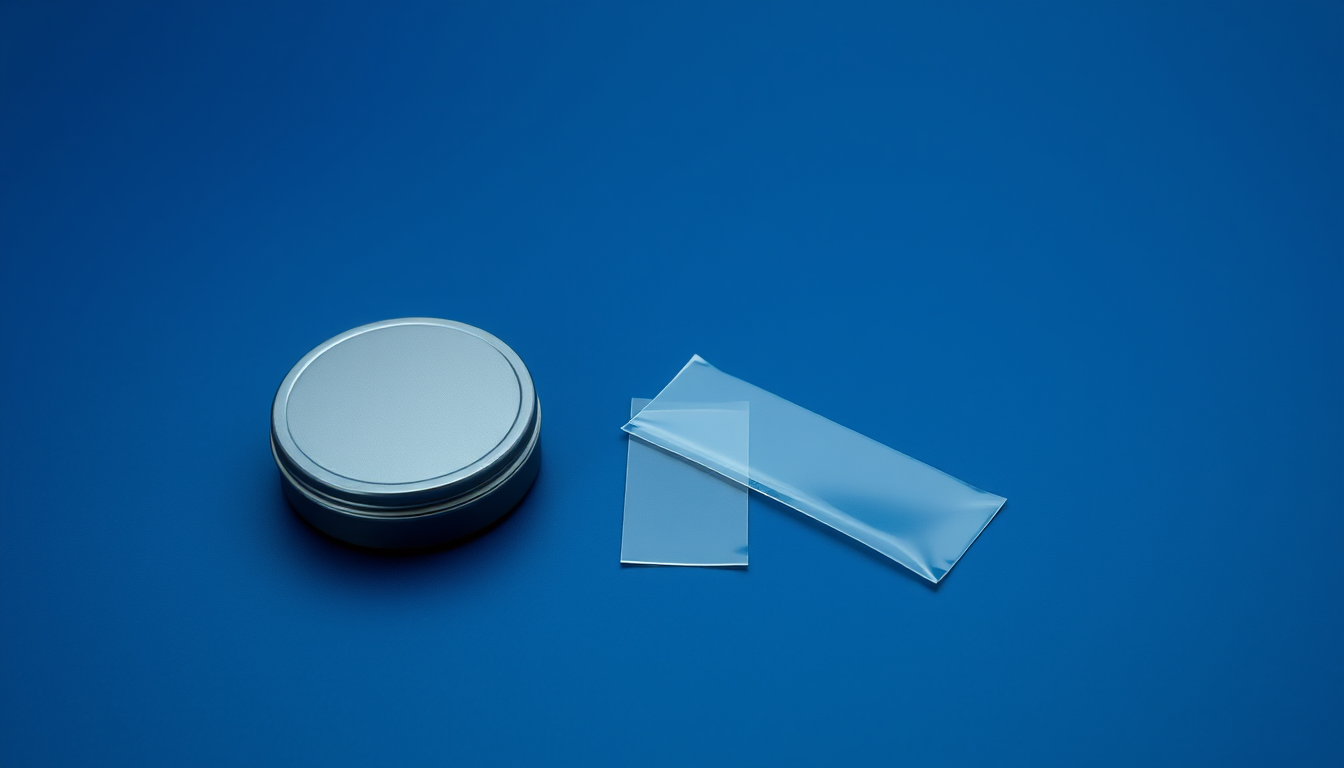
The dried film is a glassy or semi-crystalline polymer matrix with the active dispersed through it, and residual moisture is a formulation variable. A 2021 AAPS PharmSciTech paper by Wang and colleagues screened HPMC, polyvinyl alcohol, low-substituted hydroxypropyl cellulose and pullulan for compatibility with a moisture-sensitive active, then measured moisture content and uptake alongside tensile strength, disintegration time and drug content; the final films dispersed within seconds. For NAD+, whose main degradation routes need water and hydroxide, a low-moisture film in a sealed, light-blocking tin is a reasonable way to present a pre-measured solid. It is not a guarantee; the certificate of analysis shows whether it worked for a given lot.
NAD+ biology: a brief, attributed summary
Redox and signaling roles
A 2021 review in Nature Reviews Molecular Cell Biology by Covarrubias, Perrone, Grozio and Verdin (Buck Institute and UCSF) describes NAD+ as the coenzyme for hundreds of redox reactions, cycling with NADH, and as the substrate for three families of consuming enzymes: sirtuins (deacylases), poly(ADP-ribose) polymerases (PARPs, central to DNA-damage signaling), and the CD38/CD157 glycohydrolases that make cyclic ADP-ribose. Each consumes NAD+ by cleaving the same nicotinamide-ribosyl bond discussed above. The nicotinamide released is recycled by nicotinamide phosphoribosyltransferase (NAMPT) to nicotinamide mononucleotide and then back to NAD+, the salvage loop the authors identify as the main source of NAD+ in mammalian tissue.
Levels, ageing models, and precursor studies
The same review reports that tissue NAD+ levels decline with age in multiple model organisms, including rodents and, per the authors, humans. A 2018 review in Cell Metabolism by Rajman, Chwalek and Sinclair (Harvard Medical School) collected the in vivo evidence for NAD-raising precursors such as nicotinamide riboside and nicotinamide mononucleotide, and reported that restoring NAD+ in old or diseased animals promoted health measures and extended lifespan in several rodent studies. Both reviews frame these as animal findings and hypotheses about human biology. For the primary studies, see NAD+ Research: What the Studies Show.
Where the evidence stops
Covarrubias and colleagues close their review by listing what remains unknown: the mechanisms that set NAD+ levels, how to restore them during ageing, whether doing so is safe, and whether repletion will benefit ageing humans at all. Rajman, Chwalek and Sinclair likewise describe the human picture as an open question. Most mechanistic work on sirtuins, PARPs and CD38 comes from cultured cells, worms, flies and mice; no human functional outcome has been established in a way the field considers settled. NAD+ as a research compound is investigational and is not approved by the FDA for any indication.
On the formulation side, the thin-film literature summarized here concerns other actives; we found no peer-reviewed study of NAD+ in an HPMC or pullulan film. The stability argument rests on general chemistry, and the lot certificate of analysis is the only direct evidence for any given strip.
Solid format: what researchers check
For a thin-film research format, the checks follow from the reviews above.
- Solvent casting and the cast sheet. Content uniformity is a property of the sheet: if the active settles or wet film thickness varies, strips from different regions will differ. A tight range across sampled units (the Shahzad study’s roughly 98 to 102 percent) is the target.
- Disintegration time in aqueous media. Hoffmann and colleagues noted the lack of a compendial test; developers adapt the tablet disintegration apparatus, a Petri dish method, or a slide frame. Reported times for HPMC and pullulan films run from a few seconds to about 30 seconds, with no reconstitution step for a weighed powder.
- Assay by HPLC. NAD+, nicotinamide and ADP-ribose separate by reversed-phase HPLC with UV detection. The lot certificate should show the NAD+ assay value and, ideally, nicotinamide as the primary degradant.
- Moisture and light protection. Residual moisture in the film and headspace in the tin govern glycosidic hydrolysis over storage. A sealed, opaque tin and a cool, dry environment follow from the chemistry.
- Strength per strip. Listed on the product page and the lot certificate, not restated here.
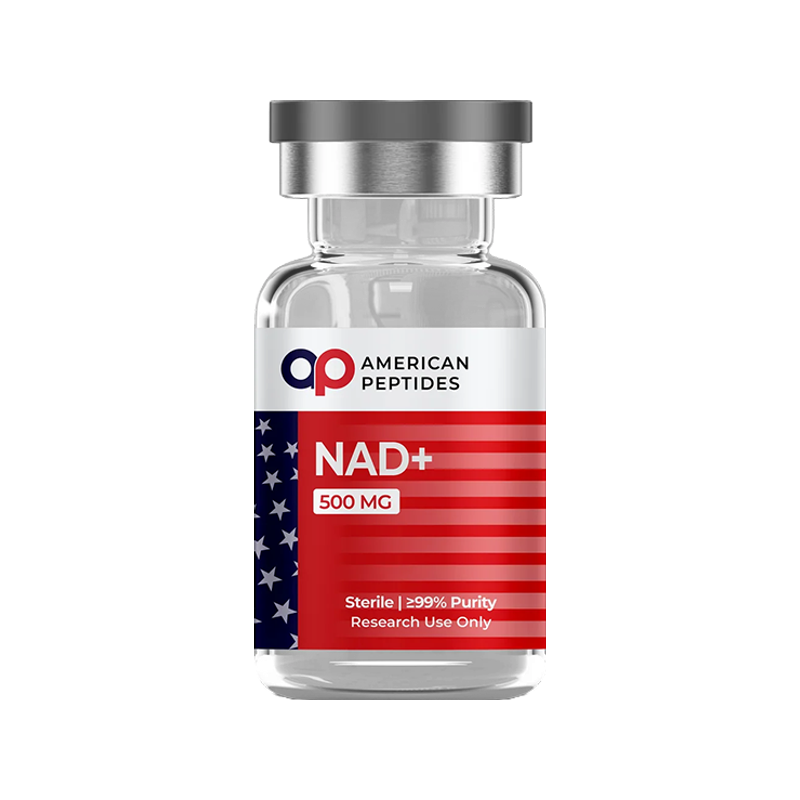
American Peptides offers Melts™ NAD+ Dissolving Strips, 30 pre-measured strips per tin in a thin-film format that disperses in aqueous media, as part of the Melts™ collection. For a general comparison of film formats with lyophilized powder, see Dissolving Film Formats.
Frequently Asked Questions
Why is NAD+ unstable in solution?
The nicotinamide ring is attached to ribose through an N-glycosidic bond at a positively charged pyridinium nitrogen. Oppenheimer’s 1994 review describes cleavage of that bond as dissociative, through an oxocarbenium intermediate, releasing nicotinamide and ADP-ribose. In base, Guilbert and Johnson showed that hydroxide adds to the ring and opens it. Water, hydroxide, heat and light accelerate these routes, which is why the solid is stored cold, dry and dark.
Is NAD+ more stable in acid or in base?
In acid. Lowry, Passonneau and Rock reported in 1961 that oxidized pyridine nucleotides (NAD+, NADP+) survive acid and are destroyed in alkali, while the reduced forms (NADH, NADPH) show the reverse. Rover Júnior and colleagues later found buffer identity also matters. Working solutions of NAD+ are therefore kept in mildly acidic to neutral, non-phosphate buffers, cold, and used promptly.
How does a thin film differ from lyophilized powder for a lab?
Both are dried solids with low water activity. A lyophilized vial holds a bulk amount that the researcher weighs or reconstitutes. A solvent-cast film holds a pre-measured amount of the active in an HPMC or pullulan matrix that disperses in aqueous media in seconds, with no weighing or reconstitution step. The trade-off: content uniformity across the cast sheet becomes a lot-level attribute to verify on the certificate of analysis.
Is NAD+ approved by the FDA?
No. NAD+ as a research compound is investigational and is not approved by the FDA for any indication. The biology reviewed by Covarrubias and colleagues (2021) and Rajman and colleagues (2018) comes mainly from cultured cells and rodent models, and both groups state that the human questions remain open. American Peptides sells Melts™ NAD+ strips strictly for in vitro laboratory research, not for human or veterinary use.
Citations
- Lowry OH, Passonneau JV, Rock MK. The stability of pyridine nucleotides. J Biol Chem 1961. PMID 14466980
- Guilbert CC, Johnson SL. Investigation of the open ring form of nicotinamide adenine dinucleotide. Biochemistry 1977. PMID 13813
- Oppenheimer NJ. NAD hydrolysis: chemical and enzymatic mechanisms. Mol Cell Biochem 1994. PMID 7898470
- Rover Júnior L, et al. Study of NADH stability using ultraviolet-visible spectrophotometric analysis and factorial design. Anal Biochem 1998. PMID 9648652
- Covarrubias AJ, Perrone R, Grozio A, Verdin E. NAD+ metabolism and its roles in cellular processes during ageing. Nat Rev Mol Cell Biol 2021. PMID 33353981
- Rajman L, Chwalek K, Sinclair DA. Therapeutic potential of NAD-boosting molecules: the in vivo evidence. Cell Metab 2018. PMID 29514064
- Hoffmann EM, Breitenbach A, Breitkreutz J. Advances in orodispersible films for drug delivery. Expert Opin Drug Deliv 2011. PMID 21284577
- Borges AF, Silva C, Coelho JF, Simões S. Oral films: current status and future perspectives: I - galenical development and quality attributes. J Control Release 2015. PMID 25747406
- Dad HA, Shabbir AS, Ali S, Mahmood T. Neoteric approach of fluoxetine laden orodispersible film for non-compliant pediatric patients of selective mutism and obsessive-compulsive disorder. Turk J Pharm Sci 2021. PMID 34978397
- Shahzad Y, et al. Natural and semisynthetic polymers blended orodispersible films of citalopram. Nat Prod Res 2020. PMID 30663358
- Wang B, et al. Development, in vitro and in vivo evaluation of racecadotril orodispersible films for pediatric use. AAPS PharmSciTech 2021. PMID 33389269
This article is for laboratory research reference only. American Peptides products are sold strictly for in vitro research. Not for human consumption.
Related research
Compliance Notice: American Peptides products are sold strictly for laboratory and academic research purposes only. They are not intended for human or veterinary consumption, diagnosis, treatment, or prevention of any disease. All content on this page is educational in nature and does not constitute medical advice or product claims. Researchers are responsible for handling these compounds in accordance with their institution’s safety protocols and applicable laws.