Search for a peptide blend and you get vendor pages. Add the word “reddit” and you get people comparing notes, asking which blend is which, and arguing about whether any of it holds up. The KLOW blend is a good example. Threads about it run from r/Peptides and r/Peptidesource to r/tressless, r/ScienceBioTechnology, r/PeptidePathways and r/USPeptides, mostly from 2025 and 2026. This roundup summarizes what those threads ask and claim, then checks the claims against the published literature on each component: GHK-Cu, BPC-157, TB-500 and KPV.
One note on method: most KLOW threads are too recent for public archives to hold their comment text, so for several we can report only the question asked, not the answers.
Research-use-only context. This article summarizes published third-party scientific literature — the large majority of it conducted in cultured cells or animal models. It is not medical advice, not a therapeutic or performance claim, and not a usage guide. American Peptides products are sold strictly for in vitro laboratory research and are not for human or veterinary use.
First, the naming confusion: GLOW vs KLOW
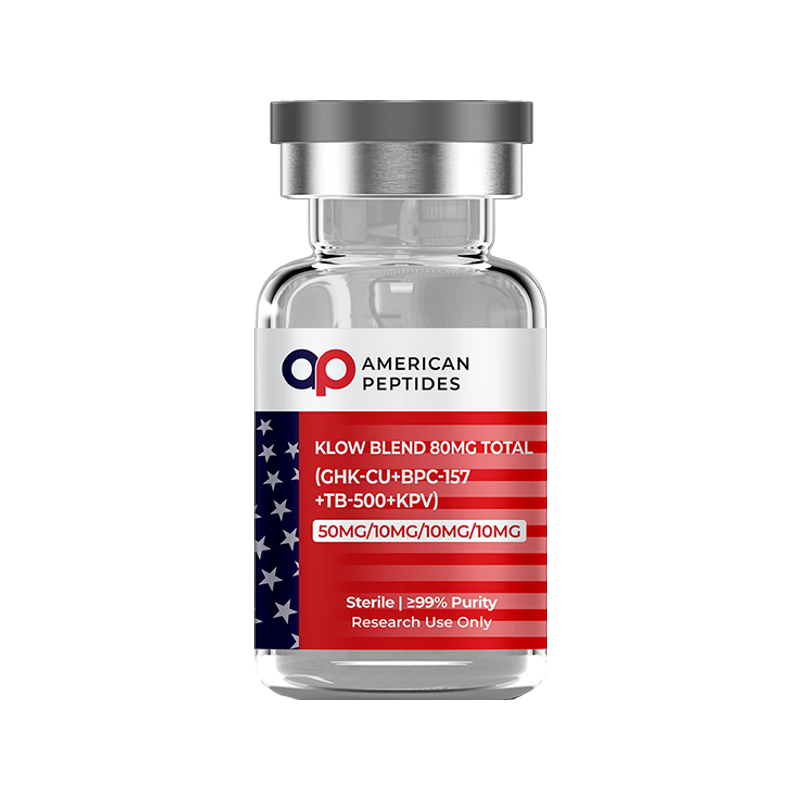
Before the themes, the question that comes up in almost every thread. “GLOW” is the Reddit shorthand for a three-part blend of GHK-Cu, BPC-157 and TB-500. “KLOW” is the same three plus KPV, a tripeptide (Lys-Pro-Val) taken from the C-terminal end of alpha-melanocyte-stimulating hormone. The K is for KPV. Posters frequently use the two names as if they were interchangeable, and an entire r/Peptidesource thread in 2025 was titled simply “klow or glow”. An r/ScienceBioTechnology series published separate explainers for the GLOW stack and the KLOW blend. For a researcher the distinction is not trivial: the fourth component changes the chemistry of the vial and adds a second, melanocortin-related anti-inflammatory mechanism.
What Reddit threads say about the KLOW blend
Why people are interested: skin and hair
The dominant angle is cosmetic curiosity. A 2025 r/Peptides poster was looking at KLOW for aging-skin benefits. On r/tressless, a hair-loss forum, a 2026 post claimed the blend had “saved” the poster’s hair, with before-and-after framing in the title. We could not retrieve the replies, so we cannot say how the subreddit received it. The interest itself is easy to explain: GHK-Cu has a long cosmetic-ingredient history, and Reddit extends that reputation to any blend containing it. Whether the blend adds anything over the single peptide is not a question the threads answer.
Testimonial-hunting and “results” threads
A second cluster asks for other people’s stories. r/Peptides had a 2026 thread titled “can you share your klow testimonials”; r/Peptidesource had a 2025 thread asking about results and the reactions commenters describe; r/BodyHackGuide collected “glow/klow experiences”. Much of the discussion in this category is about personal protocols, which this article does not reproduce. The pattern that matters: a blend with four active components invites attribution problems. A poster who reports a change cannot tell which component, if any, produced it.
Sourcing, hype and who is promoting it
Sourcing is the practical worry. A 2025 r/USPeptides thread flagged that a well-known YouTube personality was promoting GLOW and KLOW, and the framing of the title reads as a heads-up about influencer marketing rather than an endorsement. r/Peptidesource is where people compare vendors, and the GLOW-vs-KLOW thread there is as much about what is actually in a given vial as about which acronym is correct. The recurring questions: is the label ratio the vial ratio, is there a certificate of analysis for the blend or only for the single peptides, and does the seller publish mass-spec identity for each component.
Quality worries and the “research update emergency” thread
One title stands apart. A 2026 r/PeptidePathways post was headed “klow blend research update emergency”. We were unable to recover the text, so we will not characterize what it reported. The wording itself is a data point: a community using the word “emergency” about a blend is signalling concern about quality or consistency, not enthusiasm.
The questions that keep coming back
Across subreddits the same five questions recur: Is GLOW the same as KLOW? What does the KPV add? Does the blend do anything a single peptide does not? Which vendors publish real testing? And where is the evidence? A smaller r/MTHFR thread asked about the blend in the context of a methylation gene variant. Nobody on Reddit, as far as we can find, cites a study of the four-peptide combination, because none exists.
What the published studies actually show
The honest framing up front: there is no published, peer-reviewed study of GHK-Cu, BPC-157, TB-500 and KPV together. Everything below is component literature, almost all of it in cultured cells or animal models. Reading a blend through its parts is reasonable for hypothesis-building and nothing more.
GHK-Cu: collagen synthesis and remodeling in fibroblast cultures
The copper-binding tripeptide GHK was isolated from human plasma in the 1970s. The foundational cell-culture result is Maquart and colleagues, FEBS Letters 1988, who reported that the GHK-Cu complex stimulated collagen synthesis in cultured fibroblasts at concentrations in the picomolar-to-nanomolar range, independent of any change in cell number (PMID 3169264). Pickart’s 2008 review in the Journal of Biomaterials Science, Polymer Edition catalogued the downstream effects reported across models: chemoattraction of repair cells, increased synthesis of collagen, elastin and metalloproteinases, and proliferation of fibroblasts and keratinocytes (PMID 18644225). A 2015 BioMed Research International review by Pickart, Vasquez-Soltero and Margolina framed GHK as a modulator of multiple skin-regeneration pathways, drawing partly on gene-expression datasets (PMID 26236730). This component carries most of the blend’s skin reputation; note that most of its reviews are by the peptide’s original discoverer.
BPC-157 and TB-500: the tissue-repair pair
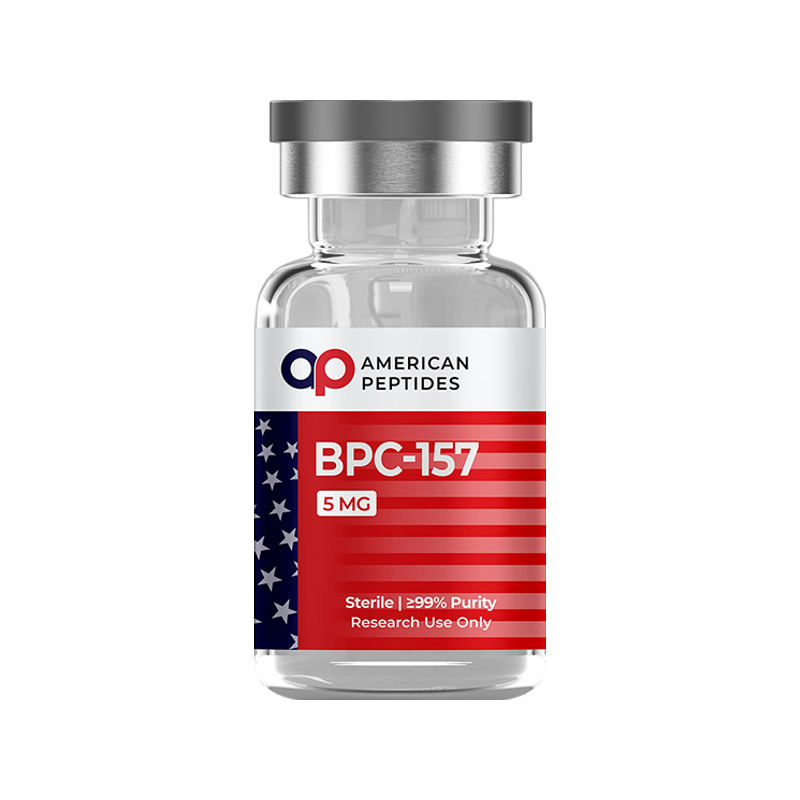
BPC-157 is a 15-amino-acid fragment of a gastric protein studied mostly by a single group in Zagreb. Sikiric and colleagues’ 2018 review in Current Pharmaceutical Design summarized decades of rat work on cytoprotection, endothelium protection and vascular recruitment toward injured tissue (PMID 29879879). Independent mechanistic data come from Chang and colleagues, Journal of Applied Physiology 2011, who found that BPC-157 accelerated the outgrowth of tendon fibroblasts from rat Achilles-tendon explants, increased cell survival under hydrogen-peroxide stress and increased fibroblast migration in a transwell assay, with activation of the FAK-paxillin pathway (PMID 21030672).
TB-500 is the research name for a fragment of thymosin beta-4, a 43-amino-acid actin-sequestering protein. Malinda and colleagues, Journal of Investigative Dermatology 1999, reported that thymosin beta-4 increased re-epithelialization, collagen deposition and angiogenesis in a rat full-thickness wound model and stimulated keratinocyte migration in a Boyden chamber (PMID 10469335). Goldstein and Kleinman’s 2015 Expert Opinion review summarized the regenerative cascades attributed to the protein across animal models (PMID 26096726). Sosne’s group, Experimental Eye Research 2007, reported that thymosin beta-4 suppressed NF-kappaB activation in corneal epithelial cells, overlapping the mechanism reported for KPV (PMID 17254567). Note that the fragment sold as TB-500 is not identical to the full protein used in most of these studies.
KPV: the anti-inflammatory tripeptide
KPV is the C-terminal tripeptide of alpha-MSH. Brzoska and colleagues’ 2008 review in Endocrine Reviews described it as retaining the parent hormone’s anti-inflammatory activity in vitro and in animal models while lacking its pigmentary effect, which is why it attracted interest as a stand-alone molecule (PMID 18612139). The most-cited primary study is Dalmasso and colleagues, Gastroenterology 2008: nanomolar KPV inhibited NF-kappaB and MAP-kinase signalling and reduced pro-inflammatory cytokine secretion in human intestinal epithelial cell lines and Jurkat T cells, with uptake through the PepT1 transporter, and it reduced inflammation in two mouse colitis models (PMID 18061177). That is a gut and immune-cell literature, not a skin or hair one. Its presence in a “skin blend” rests on the idea that an anti-inflammatory component complements repair-oriented peptides: a hypothesis, not a finding.
Where Reddit and the research disagree
The gap is wide. Reddit discusses KLOW as a finished thing with expected outcomes; the literature contains no study of the combination at all. Component studies are cell-culture and rodent work, and the two most prolific sources (Pickart on GHK-Cu, the Sikiric group on BPC-157) are the compounds’ own champions. Thymosin beta-4 has the most independent data, mostly generated with the full protein rather than the fragment. KPV’s best evidence is in intestinal models unrelated to the skin and hair questions driving the threads.
None of the four components is approved by the FDA for any indication; all are investigational. Nothing is published on how the four interact in solution, whether copper from GHK-Cu affects the stability of the other three, or whether a mixed vial behaves like four separate ones. The before-and-after claims on r/tressless and the testimonial threads on r/Peptides and r/Peptidesource are anecdotes about a product with four variables, uncontrolled and unblinded. The “emergency” thread, whatever it contained, points to the one thing Reddit and the literature agree on: a blend is only as good as the verification behind each component.
Sourcing and verification: what researchers check
For a four-component blend the checklist is longer. Researchers look for a certificate of analysis covering the blend as supplied, not four separate single-peptide certificates, with HPLC purity for each component and mass-spectrometry identity confirming each expected molecular weight; the four differ enough in mass to be distinguished in one run. Lot numbers should tie the certificate to the vial in hand. Because GHK-Cu carries copper, which can catalyze oxidation of methionine-containing peptides, lyophilized storage, protection from light and cold-chain shipping matter more for this blend than for most. Once reconstituted for bench work, bacteriostatic water is a chemistry choice for limiting microbial growth in the stock solution, nothing more. The American Peptides KLOW blend page lists the components and analysis documents, and our KLOW blend research article walks through the component literature in more depth than this roundup.
Frequently Asked Questions
What does Reddit say about the KLOW blend?
Reddit threads from 2025 and 2026 on r/Peptides, r/Peptidesource, r/tressless and r/ScienceBioTechnology mostly ask about skin and hair, request testimonials, debate the GLOW-versus-KLOW naming, and warn about influencer promotion and vendor quality. Much of the discussion is personal protocols, which this article does not reproduce. No thread we found cites a study of the four peptides together, because none has been published.
What is the difference between GLOW and KLOW?
GLOW is the Reddit name for a three-part blend of GHK-Cu, BPC-157 and TB-500. KLOW is the same three peptides plus KPV, the anti-inflammatory C-terminal tripeptide of alpha-MSH. Posters often use the names interchangeably, which is why an r/Peptidesource thread was titled “klow or glow.” For a researcher, the added KPV changes both the chemistry of the vial and the mechanisms under study.
Is the KLOW blend approved by the FDA?
No. Neither the KLOW blend nor any of its four components (GHK-Cu, BPC-157, TB-500, KPV) is approved by the FDA for any indication. All four are investigational compounds, and the combination has never been studied in a published trial. American Peptides sells the blend strictly for in vitro laboratory research; it is not for human or veterinary use.
Is there any published research on the four peptides together?
No. The literature covers each component separately, almost entirely in cultured cells and rodent models: Maquart 1988 and the Pickart reviews for GHK-Cu, Chang 2011 and the Sikiric reviews for BPC-157, Malinda 1999 and Goldstein 2015 for thymosin beta-4, and Dalmasso 2008 and Brzoska 2008 for KPV. No peer-reviewed paper has tested the four in one preparation or examined how they interact in solution.
Citations
- Maquart FX, Pickart L, Laurent M, et al. FEBS Letters 1988. PMID 3169264
- Pickart L. Journal of Biomaterials Science, Polymer Edition 2008. PMID 18644225
- Pickart L, Vasquez-Soltero JM, Margolina A. BioMed Research International 2015. PMID 26236730
- Sikiric P, Rucman R, Turkovic B, et al. Current Pharmaceutical Design 2018. PMID 29879879
- Chang CH, Tsai WC, Lin MS, et al. Journal of Applied Physiology 2011. PMID 21030672
- Malinda KM, Sidhu GS, Mani H, et al. Journal of Investigative Dermatology 1999. PMID 10469335
- Goldstein AL, Kleinman HK. Expert Opinion on Biological Therapy 2015. PMID 26096726
- Sosne G, Qiu P, Christopherson PL, Wheater MK. Experimental Eye Research 2007. PMID 17254567
- Brzoska T, Luger TA, Maaser C, et al. Endocrine Reviews 2008. PMID 18612139
- Dalmasso G, Charrier-Hisamuddin L, Nguyen HT, et al. Gastroenterology 2008. PMID 18061177
This article is for laboratory research reference only. American Peptides products are sold strictly for in vitro research. Not for human consumption.
Related research
Compliance Notice: American Peptides products are sold strictly for laboratory and academic research purposes only. They are not intended for human or veterinary consumption, diagnosis, treatment, or prevention of any disease. All content on this page is educational in nature and does not constitute medical advice or product claims. Researchers are responsible for handling these compounds in accordance with their institution’s safety protocols and applicable laws.